Vortex Verlag has officially expanded its historical fantasy universe, delivering an intricate, dark vision of Renaissance Venice that masterfully bridges the gap between traditional d20 mechanics and open-ended narrative freedom. Serenissima Obscura serves as a comprehensive setting guide and modular adventure framework detailing a shadow-drenched city-state plagued by political conspiracies, mystical convergences, and a rising tide of cosmic horror.
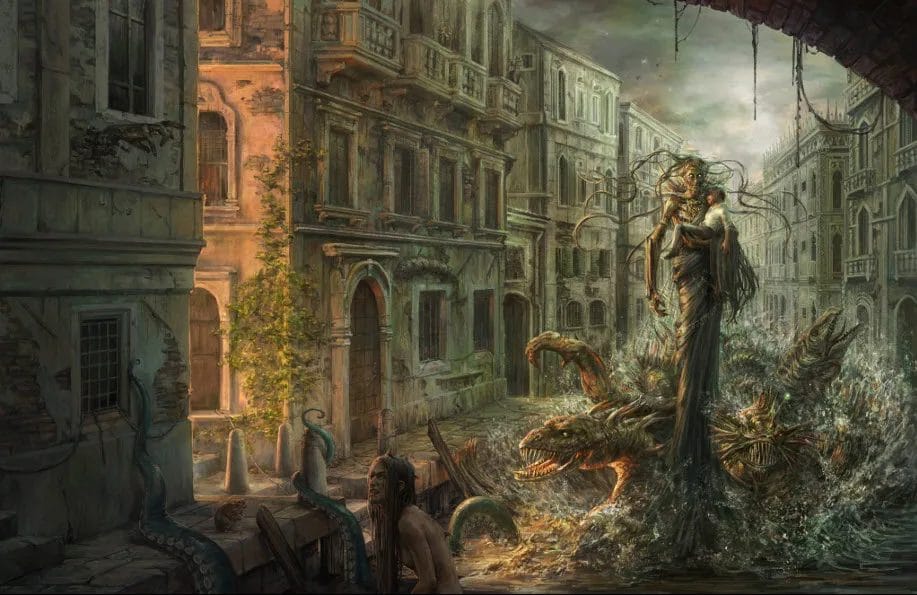
Rather than evaluating this book as a standard linear campaign, this spotlight focuses directly on its rich, historical atmosphere and the modular flexibility of its sandbox design. It builds elegantly on the world established in the publisher’s first work, The Straight Way Lost, though gaming groups can perfectly deploy this book as an entirely independent campaign setting.
The release comes at a critical time for tabletop roleplaying games as design philosophies shift toward modularity and cross-system compatibility. Following recent industry trends toward open licensing and design flexibility, publishers are increasingly moving away from rigid, single-system campaigns. This supplement tackles that challenge directly by pairing deep historical research with flexible, cross-system rulesets. Right out of the gate, the book caters to diverse tables by providing full system support for Fifth Edition (5e) alongside shorthand universal statistics for alternative systems. Crucially, the release is accompanied by a dedicated Ars Magica Conversion Guide, allowing groups to seamlessly transport this dark vision of Venice straight into the legendary Mythic Europe timeline.
Atmosphere of the Magical Renaissance
The core appeal of Serenissima Obscura lies in its evocative rendering of the Magical Renaissance, a beautifully sinister reimagining of early modern Venice. Author and artistic director Melina Sedó, alongside setlet designer Andreas Wichter, has crafted a city-state that feels completely authentic yet deeply supernatural. The setting combines an immersive historical atmosphere with deep occult mystery, perfectly designed for narrative-driven campaigns full of secrets, danger, and moral ambiguity. The book beautifully balances the opulence of the Venetian Republic with an undercurrent of dread, as the political machinations of noble doges clash with the terrifying emergence of a new Realm of Power.
Rather than presenting a static world, the book uses “setlets” to establish focused micro-settings and campaign frames. This approach allows groups to experience distinct thematic layers of the city, from the glassmaking secrets of Murano to the damp, monster-infested corners of the Venetian lagoons. Visually, the book is a triumph. The gorgeous artwork by Anton Vitus, Mark Smylie, Simone Tammetta, and Margaux Carpio perfectly captures the shadowy canals and vibrant, dangerous streets. This artistic vision is flawlessly brought together by layout designer Thorsten Janes and cover artist Runa Rosenberger, ensuring the book looks as premium as it reads.
System and Adventure Modularity
Mechanically, the book treats rules as a bridge rather than a barrier. While full integration is provided for the ubiquitous 5e system and the Ars Magica ruleset, large swathes of the book remain intentionally system-agnostic. The inclusion of native shorthand universal statistics means games masters running older editions, OSR retroclones, or entirely different rulesets can deploy the book’s contents with minimal conversion effort.
The crown jewel of this design philosophy is the collection of 27 adventure modules. Rather than forcing players down a predetermined path, these modules are built as independent, interlocking components. A games master can drop a single module into an ongoing urban campaign as a standalone side-quest or stitch dozens of them together using the provided story hooks to form a massive, sweeping sandbox campaign. This layout gives games masters an unprecedented level of flexibility to scale the narrative to their group’s pacing. Mark Smylie provides exceptionally detailed street and battle maps that visually anchor these modules, giving players a tangible sense of tactical positioning and geography as they navigate the labyrinthine waterways.
Lineages and Character Classes
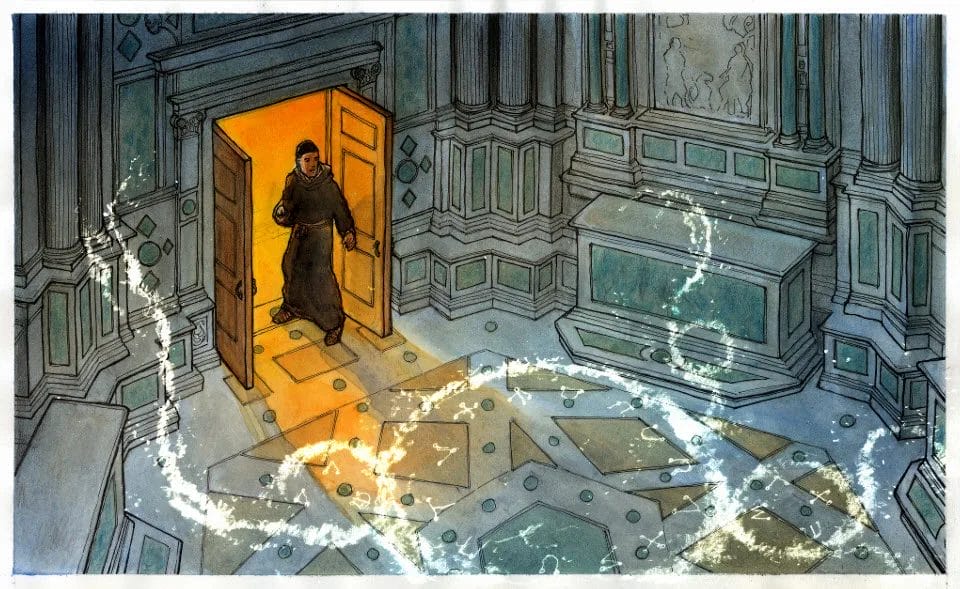
When it comes to player options, the supplement integrates mechanical crunch directly into the setting’s unique cultural fabric. The book includes a dedicated player guide PDF featuring rules from The Straight Way Lost, expanding options for historical roleplaying games. Players can choose the Children of the Lagoon, a fascinating new species tailored to Venice’s unique environment, anchoring characters directly to the region’s mystical geography.
The expansion also features two brand-new character classes designed for 5e rules:
- The Merchant: A class built around social advancement, political influence, and resource management, reflecting the economic dominance of the historic republic.
- The Gonneslinger: A class that introduces early black-powder firearms to the tabletop, capturing the exact technological turning point of the Renaissance.
These options are supported by innovative mechanics for setting up faction headquarters and managing social status. This ensures that character growth is measured not just by combat prowess, but by a party’s rising influence within the dangerous halls of Venetian power. Game developers Marc Braden, Michel Strack-Zimmermann, Benjamin Strack-Zimmermann, and historical advisor Ralf Parino have balanced these options beautifully, delivering a gaming supplement that is as mechanically robust as it is narratively inspiring.
Quick Links
- Vortex Verlag: Serenissima Obscura
Geek Native has had a previous financial relationship with Vortex Verlag, who sponsored our UK Games Expo 2025 news coverage.