Shiranui is a short anime film directed by Ryo Katanosaka and produced by CoMix Wave Films, screened during the 2026 Scotland Loves Anime festival in Edinburgh with the director attending in person. Set in a seaside town in 1996, it follows a troubled 10-year-old boy named Minato who turns to a wish-granting maritime mirage with a steep catch.
Short anime rarely gets full-length feature slots on a prestigious Friday night, so screening Shiranui at Cameo Picturehouse in Edinburgh meant flying Ryo Katanosaka in from Japan for a post-screening Q&A. Even at short length, it packs plenty of punch. It looks lush, hits hard early, and refuses to hand out neat fairy-tale comfort.
Coastal mirage and a bargain with teeth
The story is set in 1996, and as Ryo Katanosaka shared with the Edinburgh audience, a whale beaches itself on the shore roughly 15 years later. At first, though, the coastline looks inviting, framed by the shiranui, a glowing optical mirage out on the sea that resembles a phantom city on the horizon. In the film’s folklore, people treat it like a shooting star and make wishes on it.
Minato is a 10-year-old boy pushed to the edge by an abusive, deadbeat father. His hatred runs so deep he wishes his father dead, taking that wish to a shrine on Benten Island reachable from near home. A figure tied to the shrine on Benten Island, who feels like a comforting spirit or perhaps a projection of Minato’s own fractured mind, sounds gentle and reassuring while dropping a brutal rule: wishing for a father’s death demands a sacrifice of equal weight. Sacrificing a fish will not cut it.
No sacrificing fish is going to cut it.
Within the opening five to seven minutes, the film turns sharp and dark, establishing stakes that never feel padded.
Visual craft and unfinished endings
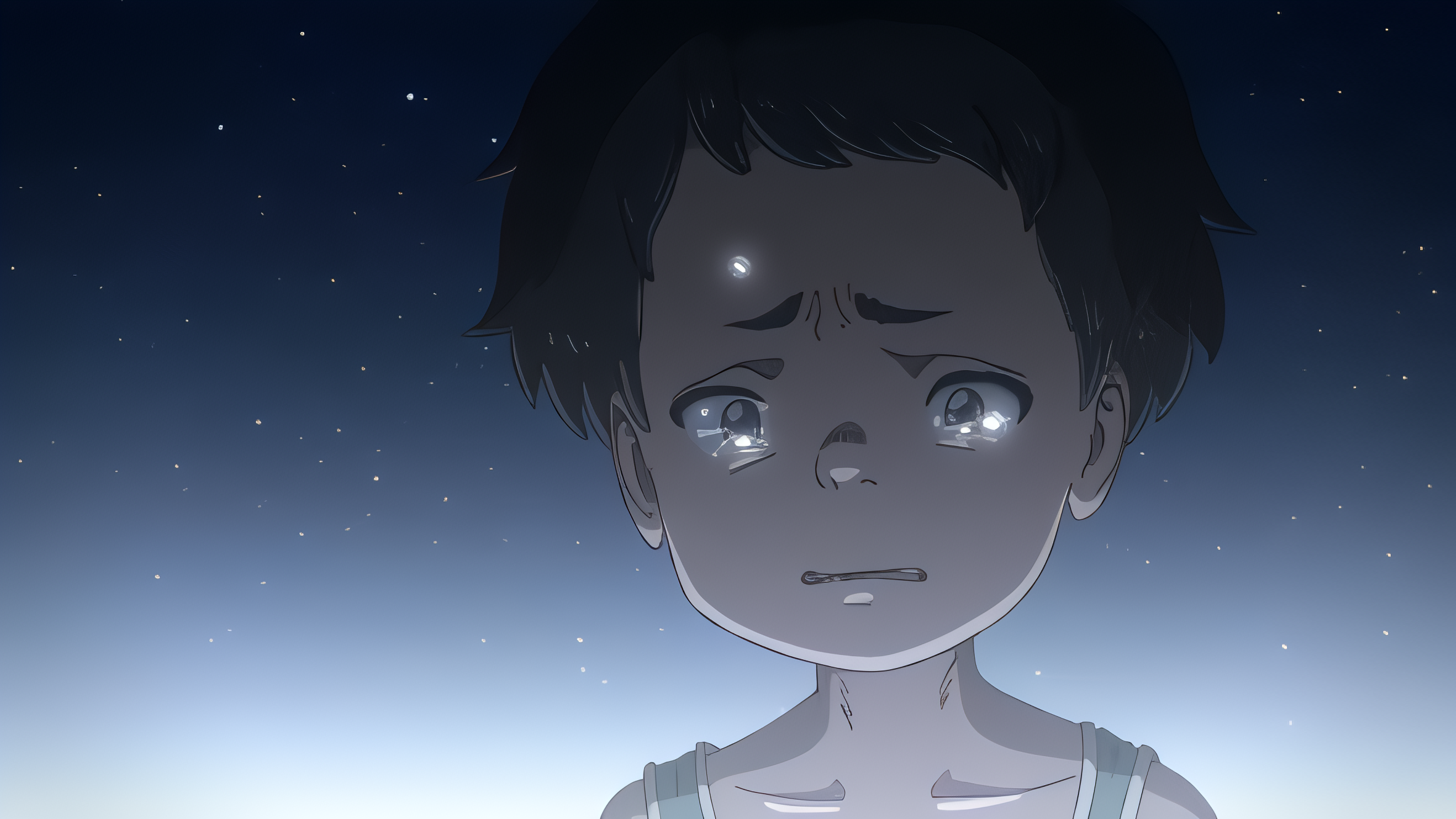
Ryo Katanosaka writes and directs with brisk economy, so nobody sits around waiting for the plot to start, whether they usually watch giant robot shows or magical girl titles. Even with heavy themes, the short runtime keeps things moving without dragging its heels.
Some viewers will find the ending too surreal or open-ended, leaving too much up to guesswork rather than tying every thread into a bow. During the Edinburgh Q&A, Ryo Katanosaka noted that his research included speaking with children’s care home staff, who pointed out that tidy “happily ever after” storybook endings often do not ring true for kids going through hard lives. That choice explains the film’s refusal to offer easy closure and makes it a solid recommendation for viewers who appreciate bleak, atmospheric anime shorts like Look Back or Sonatine and want something moody rather than sugar-coated.
Enjoyed? Hated? If you were in the Edinburgh audience, you can vote for this one in our unofficial SLA-ED poll.

