Around thirty years ago, I saw my first Call of Cthulhu media. I was eleven and didn’t know who Lovecraft was, or really have any idea how most RPGs functioned. But seeing the cover of an old White Dwarf magazine, I knew that I had to find out what this was.

Back then, it wasn’t an easy task for a boy growing up in Middle England before the rise of the internet. As I discovered RPGs through various older wargamers and slowly moved into that circle, a discussion came up about the game and how it was an actual horror game. My young mind was blown. I had to play this, to own it, to run it.
But the winds of fate were not blowing in my direction. When I started my RPG hobby, I only had so much disposable income, and most of the people I knew were playing White Wolf games. So I fell into the World of Darkness, 2nd edition D&D and Last Unicorn’s Star Trek game. In the decade since I had first seen it, I played Cthulhu once.
When the 3rd edition came out, I got the D20 Cthulhu, but it never really scratched the itch, and most people weren’t interested; I managed to run a few one-shots. I had, by now, heard stories of others’ long-form campaigns. I wanted to run one, to see that long side into madness, watch very human characters deal with the ongoing horror of the mythos. But as the years ticked by, I started to believe less and less that it would ever happen. Sure, I ran one shots in D20 and then later, when I could afford the 7th edition of the game, but a longer game seemed out of reach.
And now, after thirty years of waiting, I’ve just finished my first long-form Call of Cthulhu game. Ten-year-old me is jumping around, punching the air. I’ve been running horror games for so long, this one seemed like a milestone I owed small me. And by the Gods of the mythos was it a learning curve. I wanted to share all the things I learned by running a long-awaited game.
Loss
It doesn’t matter what sort of game you’re running and if people are expecting it, loss can be a powerful force for storytelling. We lost a couple of PCs along the way, and each time it felt hard for the rest of the characters to keep going without getting twisted up in a snarl of loss and anger (made harder by the fact that one of the players who lost a character ended up playing the widower of their original character).
This might sound horrible, but in fact it added to the feeling of the game. We couldn’t just pan away from the loss; we were stuck with it on a human level, and the deaths in the campaign sat between the survivors, full of guilt and pain. It drove the motivation of the group forward, allowing them to have a reason to keep fighting despite the ongoing horror: they were going to make the horrors pay for killing some of them.
In a longer form horror game, it’s worth dwelling on the stages of grief for a while, to make those losses feel real. In a one shot, we can feel the short sharp shock of a horror game but the gnawing, inevitable hopelessness is something that only creeps in during a longer form game.
Keeping Them In The Dark
In a horror game, agency is sometimes less flexible than in other styles of play: these characters are only mortal and only have so many resources before them. I fully leaned into this for a few sections, and when one character went missing with no explanation, and the player brought in their roommate, who was now looking for them, I kept up the sense of unknowning for a while, and it created a strange lack of agency for both player and character. The player said to me “It’d be better if my first character just died, at least we’d know what happened”. It turns out a powerful tool we have our disposal as GMs is unknowing. Over a long time frame, this can create real discomfort and a sense of unease. When I reversed the situation and had the old character come back in exchange for the new one disappearing, the player was visibly shaken. You could see the barrier between the player and character vanish. They were experiencing a true sense of cosmic powerlessness.
Kindness
With these two observations, you can see it was quite a tense game to run and put us all through the wringer psychologically. It was important, therefore that part of the endgame of the campaign gave the players a real reward, one more important than their characters saving the human race. They regained agency.
I took time to give each player a moment of returning to their lives or moving their lives forward: Our consultant went on to affect change in the workforce, the widower found faith after a life of crime, our young woman with a domineering father got to choose to leave home with her new beau, our our separated ‘roommates’ got to find each other in a crazy cosmos and to move towards mental healing and our young pulp novel enthusiast got reassurance that while it wasn’t everyone’s path, his life would work out.
Then I set up a scene in which they were offered one last mission to strike at the heart of darkness in a way that would be decisive but might cost them the new lives they had just gained. Most of them chose to walk away. I loved it. These characters had fought so hard for agency, the fact some of them chose to have their lives back and not continue the fight was beautiful. I realised that all great horror campaigns sort of have to end this way – with a return of power to the protagonists.
I think it’s important to the end of all campaigns, and something I hadn’t really thought of before. Not just the need to act with kindness towards your players towards the end but when we’re at the end of a game, we have to have a reason for it to end. Not just ‘the story is over’ but a reason why these characters aren’t being played any more. The game makes more sense if they are splitting up or moving on, because it’s then about ‘this was the time in our lives we were together’.
On a meta level, this adds the game an unexpected emotional power. Because it echoes what you as players are doing. The game is over. That time of your lives is finished. It won’t be the same. But agency is back and you own those experiences. You’ve made your own mythos. Time to move on to new parts of life. Or new games.
Final thoughts
I think the last thing I need to share is: just never give up on things you dream of when you’re a kid. Look, I know ‘running a Cthulhu game’ isn’t curing cancer or anything, but it still took me forever to get there, and many times I thought it’d never be a thing: no heartbreaking loss but a small thing I’d never get to run. It may have taken nearly thirty years, but I got there. Even small victories are victories.
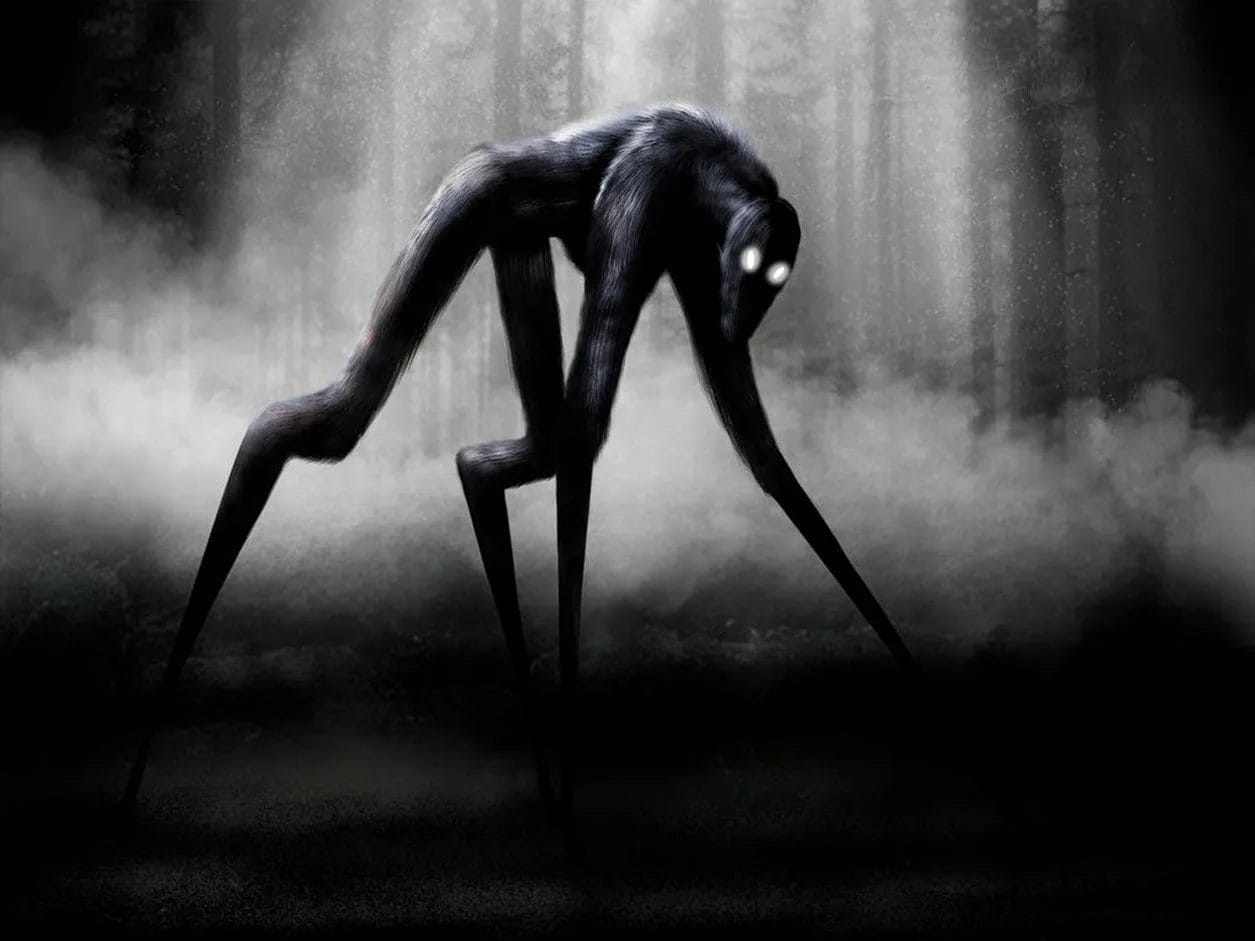
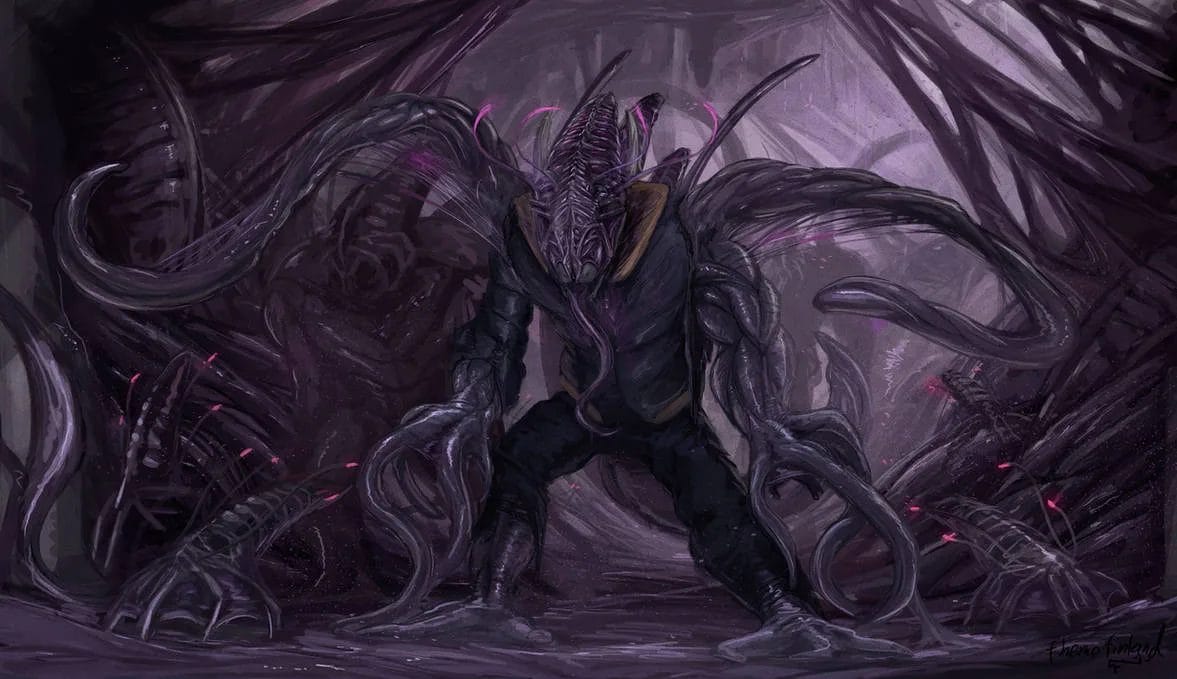
Creative Commons credits: The King in Yellow by Jakub Jogoda, Strider by Raulovsky and Amalgamate parasite by ThemeFinland.


