Imagine with me for a second. There has been a murder of a government official in the Duchy of Vaesenheim. In order to persuade the local duke to give them permission to enter the sacred dungeons of the overgod, the player characters need to solve the murder. They must show they are prepared to work to aid the duke’s operations and keep the state in working order.

When the group arrived, you described Vaesenheim in detail: its lurking misted streets, the way the locals seem quiet and fearful, and four or five different locations the players can see as they approach the township from a position of elevation. As the players, now engaged with the lord’s mission, hire a room in a nearby inn, you say, “So what are you going to do?” and you go round the table.
The first player, desperate to solve the mystery, suggests they are going to cruise the taverns, trying to make unsavoury friends in order to see if they can find out who might have committed the murder. One player with a more scholarly bent wants to go to the official’s house and look for clues. The third player isn’t sure but notices the people seem fearful; maybe the mist hints it is linked to their backstory, so they are going to go out to the edge of town, meditate, and see if they detect any hint of malice in the mists.
You turn to the fourth player.
“Oh, I’m just going to sit in my room at the inn and read a book.”
And you just… you don’t know what to do. Your brain spirals. You have prepared a mystery, and two players are going straight at it. Another player really isn’t in the right place at all, and you are not sure their abilities work like that, but they are doing something and you can work with that. But the last player isn’t doing anything. And they always do this. Any chance to just not do a thing, they take it.
How can you provide content if they just don’t engage? How many times can you bring the plot to them rather than go and seek it without it all feeling railroaded?
Let’s look deeply at players who don’t engage with the game world in a dynamic way and how you can maybe help them get more out of the game, or move from a static position.
Identification Is Important
I currently have four types of players in different games who more often than not will take this route if not presented with clear options. However, I think the reasons they do this are all different. In order to help a player engage we first have to understand why they are disengaged and if they even need help. So let’s look at my four players for a second.
- Player One is just tired easily: They don’t have a lot of social spoons and want to just be at a table with their friends when a story is unfolding. They will engage with the game when the action is on top of them and help their friends out when they need it, but when they are on their own, they tend to opt for something quiet.
- Player Two is making character decisions: The character is in a dark place and abuses substances. They are grim, have suffered a loss or two, and will often be sullen and surly to other PCs even in moments of team unity. So, when alone, they have a habit of isolating themselves.
- Player Three has misunderstood: This player is used to or expects a railroad. They expect the plot will progress no matter what happens. They don’t feel a need to engage because their perception of the game is that “something will turn up”. They stated as much in the past, while in character. As a result, they are passive in the game.
- Player Four is not interested in the plot: This player is engaged but often in their own business and will avoid clues and moments that don’t serve that end. They have got an idea about what the game is about and they have fun when it meets those expectations. But that perception doesn’t actually meet what the game is serving up. So they ignore and drop things that seem tangential to their character’s interests and don’t pass things along to the group.
As you can see, each of these reasons is very different and requires a different set of responses from a GM. Let’s look at each player and see where we are at.
Tired
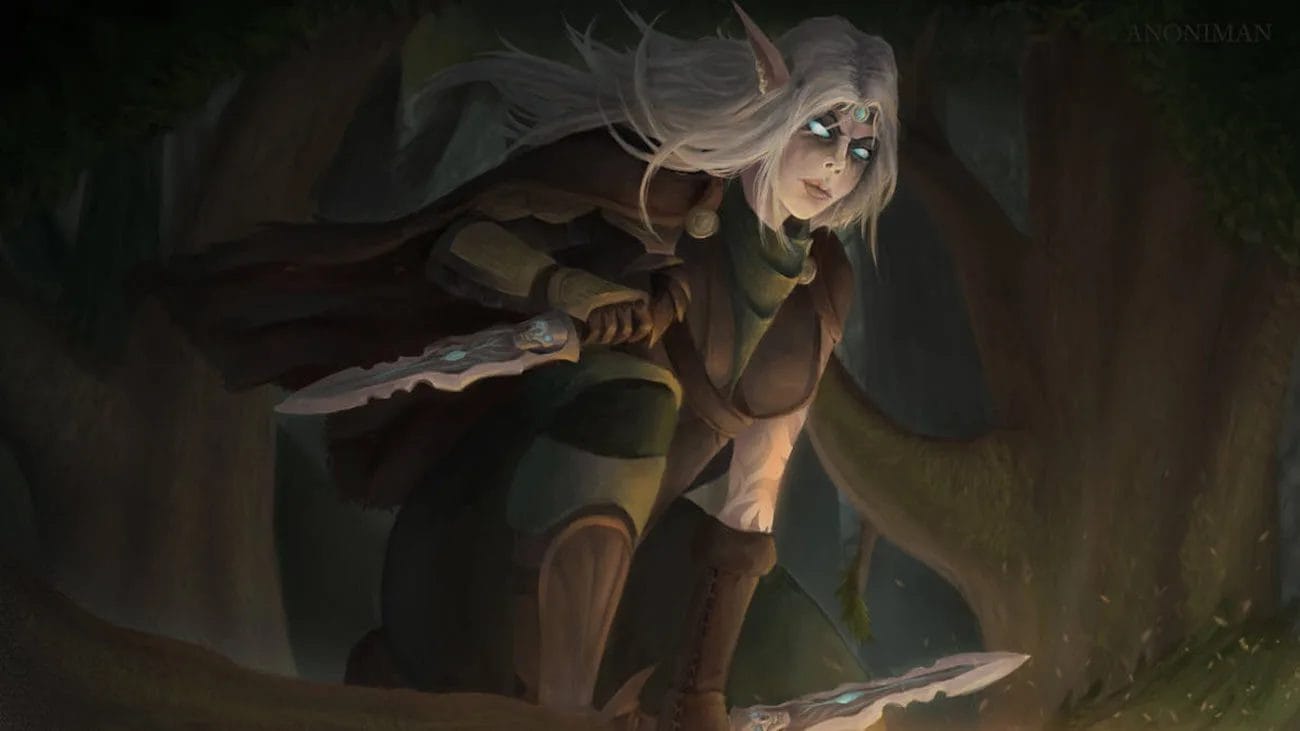
Look, some people simply aren’t here to engage 24/7. This type of player often enjoys the game and just hasn’t got the staying power others have. But they are never letting other players at the table down; they are just taking a breather because they find focus on them to be stressful or taxing without someone else to bounce off of.
I’m happy to let them rest and if you have one of these you should be too. They’ll engage with the important bits, so don’t always be throwing plot at them when they rest. Maybe have one for when they look ready, because they will rise to the challenge, but respect their space, especially if they ask you to. In this case, the lack of engagement isn’t anyone’s “fault”, it is just the fact games can be intense for some people.
In Character
This is quite hard. You don’t want to penalise someone for making character choices that keep them out of the action. As long as this is separate from the type four player, then it’s not a case of “what my character would do” dramatics. It is instead the idea that they want to play an introspective character who needs time to process.
The best option here is to keep offering them opportunities and seek clarification. After they say they are spending it alone, ask: “Is this because [character name] is needing alone time?” or “How are they in their loneliness?”
This gives the player a chance to expand on the inner life of the character and gives the group a chance to understand the motivation. You will be surprised how often this trick allows a player playing a loner a chance to really feel like they are part of the story and had their “turn” in the spotlight despite not actually doing anything.
Misunderstanding
The trick here is re-education. Perhaps the player is new to your style of GMing, maybe they are new to anything that is a bit more complex than video game selection trees and haven’t played a roleplaying game before. Maybe they just played D&D prewritten modules and have an idea of how it goes there.
The best way to start the re-education is not to just rant at the player but instead to openly reward players who do engage and then (this part is crucial) explain that the plot moves and things happen when they engage. Pull back the curtain of game design and show that it is through player action that the plot moves forward. Because you cannot just hint at this; they need to see, with examples, that is how your game works. Once they catch on to this, then they will either start engaging or mutate into one of these other types.
Not Interested
Look, the game is supposed to be player-led. This means people are able to drop things that don’t feel engaging. But they also are supposed to live in a world with a timetable and consequences. If a player never scratches the surface of a plot you put in front of them, they later need to find the time has passed that they could deal with that plot. If they don’t work with a group at all, the consequence sort of happens that the group doesn’t trust them. So maybe these things need to happen in order to let the player realise that this game is about a shared space.
Now having said all of that, we need to get used to the idea of saying “Ok this seems like a cool character, but how does it fit with the idea of group play? How will they engage with the plot?” and then asking players to tweak these things. Because if we don’t do that work with the players beforehand, then it’s not totally the player’s fault that they have differing expectations of the play environment. The trick here is to be clear about this element from day one.
I hope that helps you serve your players better in the long run and helps you understand how to help players be part of the game without you constantly feeling like you are bringing a railroad to them.
Creative Commons credit: The Dhampir by slipled, Elf Assassin by JakubJagoda and Cave Nagas by ThemeFinland.