The opening day of MCM Comic Con London delivered a stark reality check for video game history enthusiasts. Speaking on the Side Quest Stage at London ExCeL, id Software co-founder and Doom creator John Romero reflected on his high-profile departure from the legendary studio in 1996, revisiting a notorious sore point in the industry: he received no financial windfall from the immediate success of Quake.
Front-loading historical insights alongside his critique of modern game design, Romero provided a candid look back at the internal friction that fractured one of PC gaming’s most influential development teams. His reflections highlight the sharp divide between the Quake franchise’s massive commercial legacy and his own financial reality immediately after his exit, expanding on accounts previously detailed in his autobiography, Doom Guy: Life in First Person.
The Price of Departure: No Money from Quake
The revelation came during an on-stage retrospective covering his time at id Software, the boutique studio he established alongside John Carmack, Adrian Carmack, and Tom Hall. Despite his foundational role in shaping the dark, fully 3D worlds of the 1996 gothic shooter, Romero confirmed that his departure severed his access to the game’s immediate financial rewards.
The split occurred shortly after Quake’s release, a period marked by escalating creative tensions between Romero’s design ambitions and John Carmack’s rigorous focus on engine optimisation. Under the strict terms of id Software’s corporate buy-sell agreement, Romero surrendered his company stock upon his departure on August 6, 1996. While public internet speculation over the decades has frequently conflated corporate severance structures with ongoing game performance bonuses, Romero‘s appearance at MCM London clarifies that he did not receive ongoing royalties or direct launch revenue from the title that completely redefined networked multiplayer gaming.
Production Regrets and Technical Missed Opportunities
Looking back at the structural choices made during the chaotic development pipeline of the mid-90s, Romero expressed regret over how id Software managed its technology transitions. The gruelling stretch required to build Quake and its revolutionary engine from scratch left the studio’s design team underutilised while the core programming evolved.
Instead of keeping content creators agile by pumping out intermediate titles on existing, highly profitable hardware, the studio focused entirely on the monolithic breakthrough that was Quake. This prolonged development drag ultimately widened the philosophical gaps within the leadership team, paving the way for his departure to found Ion Storm later that year.
The Problem with Modern Shooters: “Simplification”
Turning his attention to the modern landscape, Romero offered an authoritative critique of contemporary first-person shooters, praising Valve’s classic Half-Life 2 as “one of the greatest shooters ever made” due to its difficult-to-replicate design mechanics. He noted that modern developers have largely abandoned the complex, labyrinthine level structures that defined the shareware era.
According to Romero, the emphasis on guiding players along predictable paths has diluted the raw satisfaction of exploration, removing the mechanical friction that made early PC shooters memorable.
Looking Ahead: The Pulse of MCM Comic Con London
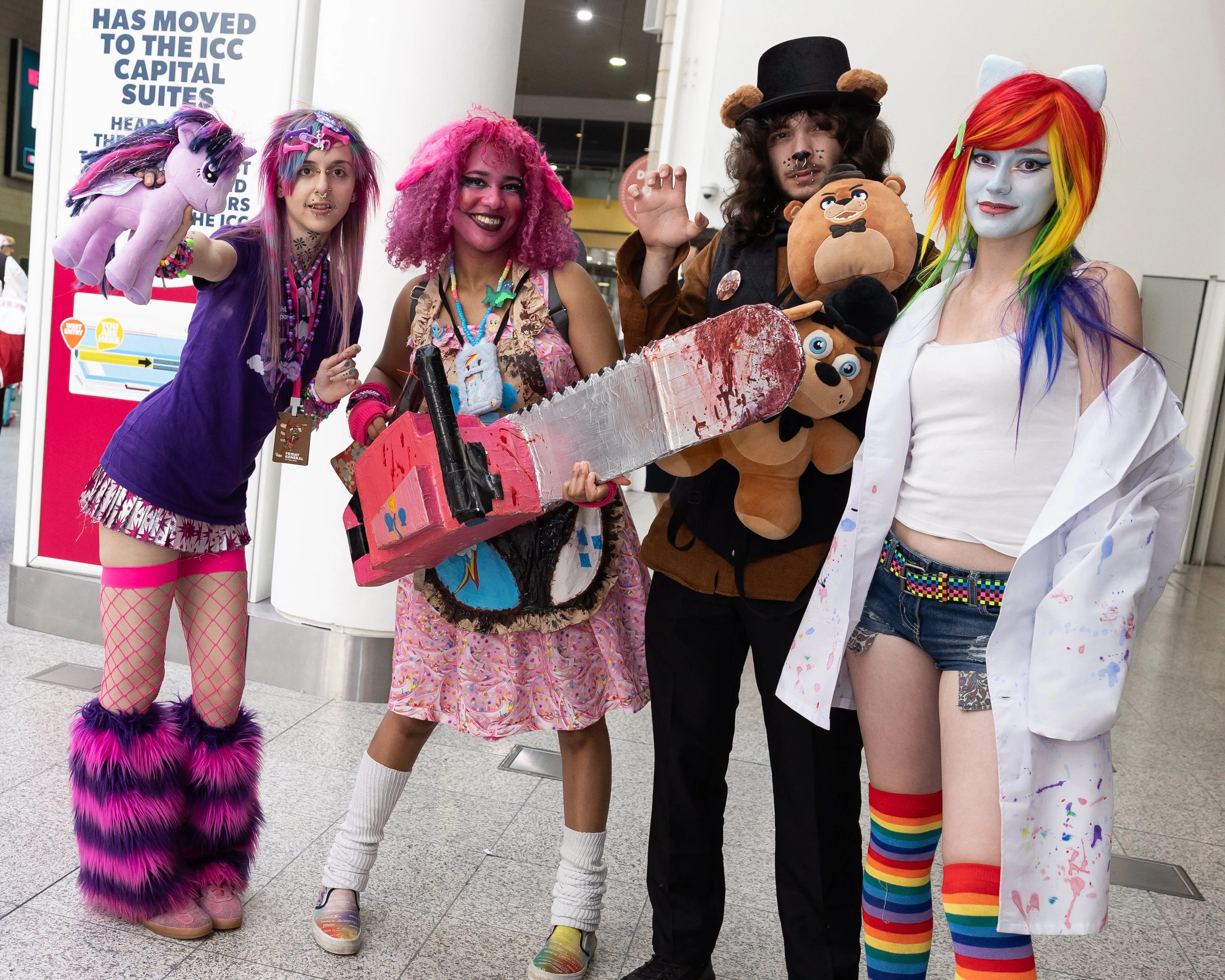
As Day One wraps up, the momentum is only building for the rest of the weekend at the ExCeL London. Attendees looking to catch remaining panels, explore the massive show floor, or secure exclusive merchandise can take advantage of extended weekend hours, with the event floor remaining open until 7:00 PM on Saturday and 5:00 PM on Sunday. General entry ticket holders gain access starting at 11:00 AM on Saturday and 12:00 PM on Sunday, while Priority and Weekend ticket holders can bypass the standard queues with early admission at 9:00 AM and 10:00 AM, respectively.
For fans who missed out on the action this time, organisers have confirmed that the UK’s premier pop culture celebration will return to the capital for its biannual autumn edition, scheduled to take over the ExCeL from 23–25 October 2026.
Quick Links
Independently covering london since 2012. Our archive includes 19 entries connected to this topic.
Latest entry: September 2026