Niantic Spatial, the geospatial artificial intelligence specialist that emerged from the 2025 spin-off of Niantic’s core technology, has announced a major leadership transition. Inhi Cho Suh, a veteran of IBM and former President of DocuSign, will take over as Chief Executive Officer effective 30 March 2026, while founder John Hanke moves into the role of Executive Chairman.
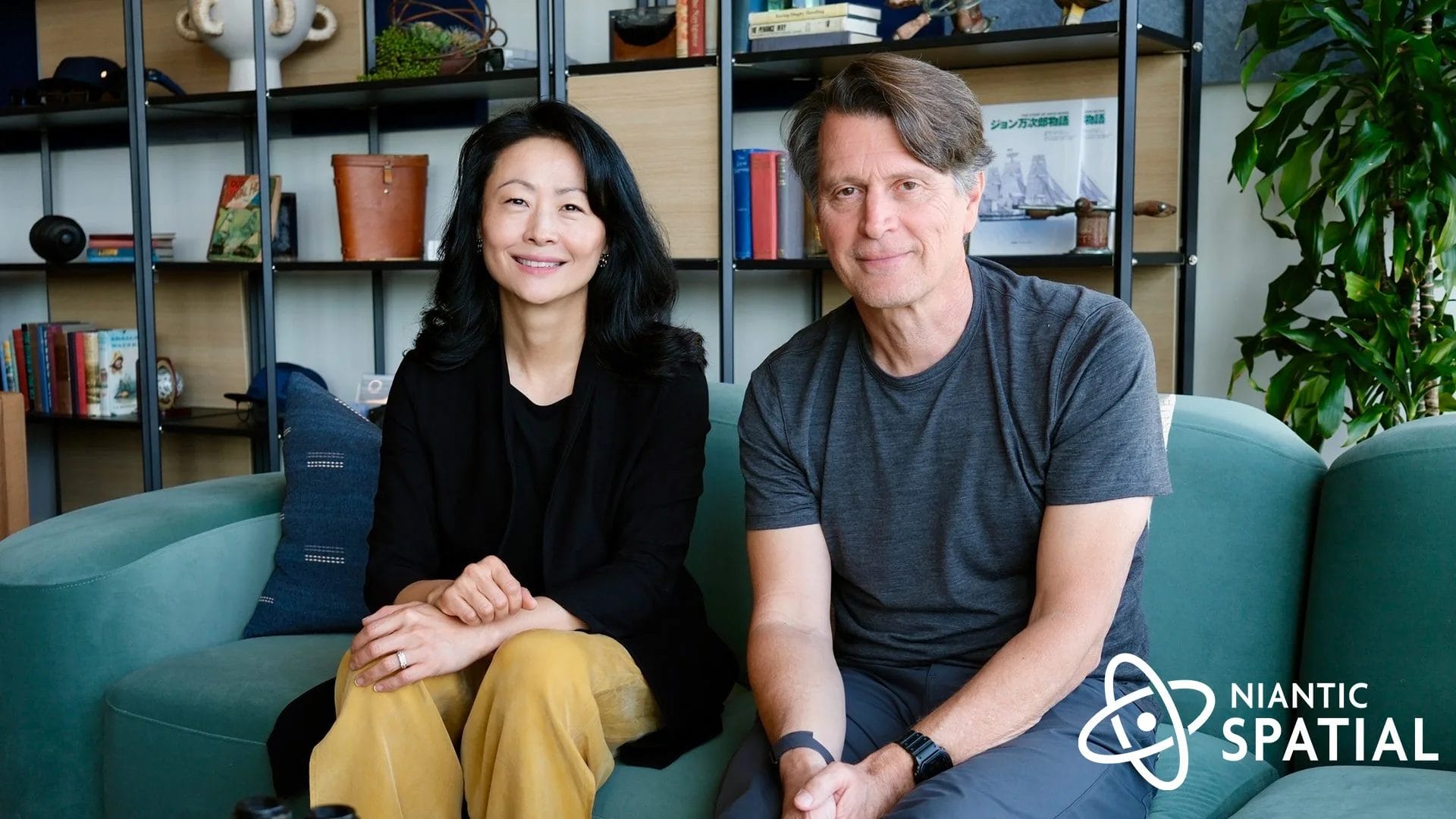
The appointment marks a definitive shift for the company, moving away from its origins in location-based augmented reality and towards the commercial scaling of “Physical AI.” While John Hanke will remain involved in product strategy and business development, Inhi Cho Suh has been tasked with transforming the company’s vast library of real-world data into a sustainable, profitable infrastructure for the next generation of autonomous machines and smart wearables.
John Hanke, Executive Chairman at Niantic Spatial, said in a statement:
Inhi is exactly the right leader to help the company realize that future. My belief is that AI is a fundamentally transformative technology and that physical AI in particular will play a massive role in a reinvented global economy. Niantic Spatial is positioned in the center of that transformation.”
Inhi Cho Suh, the incoming CEO at Niantic Spatial, said:
We have the opportunity to lead this next phase of AI and I can’t wait to get to work scaling the business and building something lasting alongside this team.”
The transition comes at a period of significant friction for the company’s legacy player base. Just two weeks ago, Ingress, the game that pioneered the mapping technology now used by Niantic Spatial, retired its Overclock feature and paused Operation Portal Recon (OPR). This move led many “Agents” to speculate that their role as voluntary “human sensors” was being devalued.
However, I’ll note that the physical world is not static; it requires constant re-scanning as environments evolve. While Niantic Spatial does not own the robotics fleets currently utilising its Visual Positioning System (VPS), such as those operated by Coco Robotics, it owns the “Ground Truth” data required to guide them. By keeping Ingress alive, even at reduced capacity, the company maintains a unique edge: a global, incentivised workforce capable of updating the world model in areas where automated sensors cannot reach.
Inhi Cho Suh‘s background suggests she is not here to build games. With over 20 years at IBM managing billion-dollar big data and machine learning divisions, her focus is likely on the 80% of the global economy that exists outside of screens. As the “Chatbot Era” gives way to the “Agentic Era,” Niantic Spatial appears to be positioning itself as the proprietary operating system for any device with “eyes”—from high-end delivery drones to the smart glasses expected to dominate the consumer market by 2027.
The “ADA” irony remains a talking point among long-term fans. The fictional AI that once served as an antagonist/ally in Ingress lore now seems a precursor to the real-world geospatial intelligence Niantic Spatial is currently refining. Whether the community will continue to provide the data that fuels this transformation remains the company’s biggest strategic gamble.
Independently covering niantic since 2015. Our archive includes 21 entries connected to this topic.
Latest entry: March 2026