Near the end of my last article, I talked about how a difference of expectations can cause some players to disengage. While it wasn’t the thrust of that article, I want to circle back to the idea of expectation for a moment. Join me on a journey of thought.
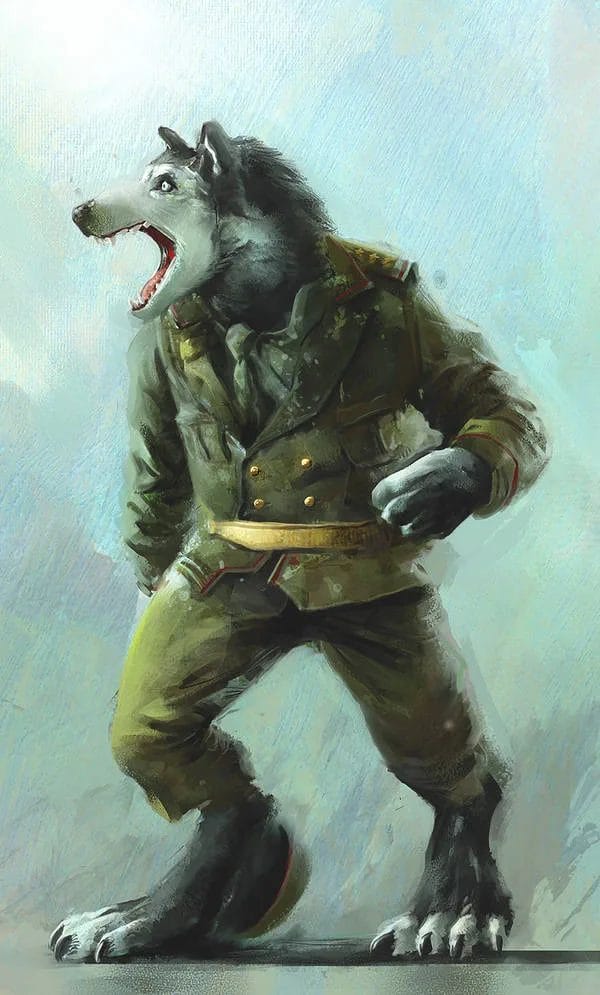
I recently had a conversation with a friend who was world building a setting for a World of Darkness game and they said something that made me stop and think. They talked about the city they were creating and mentioned that they’d carved out areas for each of the ‘races’ (meaning types of supernatural) to be. I sort of mentally did a weird little backflip as they went on to describe the rest of the campaign, which to all intents and purposes, seemed like a really cool idea and setting.
But because I’m a pedant, my mind came back to that sentence over and over, and I’ve had to think about it hard. Now the ‘race/species’ argument aside (because while that is an important discussion to have, I am going somewhere else), it laid something out to me. It’s that the way we think about how we lay out a game is dictated by our experience and that Dungeons and Dragons is inescapably still shaping the narrative focus of RPG players long after they’ve left it.
I sometimes think I got lucky coming into RPGs through a non-D&D route. I’m sort of outside enough to see how it’s shaped the expectations and language of our entire scene. Half the words we all use interchangebly come from it. It was what we had when we started, and therefore it dictates the term for the culture. Whatever a system decides to call its GM, the players will inevitably call them a ‘DM’, they will call the characters run by that person ‘NPCs’ and they’ll talk about their ‘campaign’. Even if the game they are playing uses different terminology. I don’t think I’ve heard any of my World of Darkness players ever use the term ‘Storyteller’ to refer to me.
What does this have to do with the above comment? Well, when they thought about the city being populated by areas dominated by ‘species areas’ or ‘racial control groups’ I think they misunderstood one of the general conceits of the World of Darkness as I understand it – that no group is a monolith. A city of different types of supernatural creatures isn’t going to be one group, it’s going to be a complex mash of competing ideologies, power groups and lone wolves. There are exceptions to this but in that case the unity is a scary exception, rather than the rule. In my head when I build a city in World of Darkness, I do it differently than D&D or Mutants & Masterminds. I start with a conflict between a group of two to four individuals and then extrapolate that across everything I meet.
But that’s because I came into this hobby through the WoD. And I have a series of different bias to unpack. I’ve over the years had to divest myself of putting players through too many torture scene set-pieces, understand that total hopelessness is not a good mood choice and move away from the pretentious idea that leaning into a metaplot means that I am somehow better than any other railroading frustrated author type GM (I’m not). The point I’m making is not to preach that one way is better than another.
Instead, I’m just looking at how easy it is to shape our thought process so that while we might change system, it’s easy to bring our expectations with us, causing us to make one game feel the same as the last. Even in the way we design, we can be locked into a way of thinking we don’t see. But it serves for us to be aware of those biases. One of the things I always bring into my games without really meaning to is the idea that once players start turning over stones, there’s almost no end to the plot rabbit hole. More and more elements are introduced and before the players know it, they’ve got too much to handle. I have to be aware of this and when I see the overwhelm starting to muster in my players’ eyes I have to stop before they don’t know which way to leap.
Some of this is to do with that shared language, especially of D&D. How many times have I seen GMs who are playing another game thinking about balance or encounter design? If I’m running a Call Of Cthulhu game, should I be worrying if an encounter seems fair? Should I even be thinking of it as an encounter? The game never even mentions the word. It talks about a mystery and has lots of floating components that investigators might bump into but it assumes that if you are head-to-head fighting monsters, then things have already gone pretty badly.

So while it was a small thing to say, you can see how it triggered an interesting thought process in me about where our shared language has created an expectation of play. Now I don’t think forcing all my players to call me ‘Keeper’ when I play Cthulhu or ‘Hollyhock God’ when I play Nobilis is going to cause a revolution in playstyle. But I do think I might start to think about how I deliver RPG advice and maybe listen to it differently. I might think about if I’m trying to build my next Mutants and Masterminds game in a way that serves the game and players rather than stick to tropes and ways of design I’m used to.
Even if you don’t intend to run them, it’s worth reading the design section of other games, to see if they have a different way of looking at expectations, shake up your brain. See how Apocalypse World builds its worlds, how World Wide Wrestling creates most of its action from one location each session, how Vaesen throws all of its pacing and plot into the hands of a GM to improvise while centring its adventure on the psychology of the specific creature in the mystery – who is often unkillable. How Mage is really isn’t interested in granular codification of outcomes but is clear about boundaries of what does what. Sample as many takes as you can, especially in the genres of game you love. Don’t just get Vampire, get Blood Borg and see if they can teach you about what choices you can make about GMing gothpunk vampires. Examine those bias and choices.
When we challenge and look at what we are doing, we can see where we’ve fallen into routine and where we repeat a trope because it’s key to our style. This allows us to also know when we’ve set up expectations in our players from previous games, ones that might not exist for this present one. Because when we look at making stories in RPGs we might not need system mastery, but it’s important to understand what the game line we run is asking for as opposed to other systems and trying to deliver that. Because otherwise, why did we choose that game line?

Normally, I finish these articles by hoping this has made your game easier, but in an article that suggests you should be restless in your GM chair and examining your process, this seems a little disingenuous. So, in the interests of challenging my own form, I hope to see you on the other side of this article, where I will no doubt be reinventing myself into something more easily digestible. Until then.
Creative Commons credit: Red Army Werewolf Sketch by ISignRob, The Depths by Jakub Jagoda and The Bite of a Vampire by am-Alnath.



