Directed by Timur Bekmambetov, Mercy offers a tight, contained thriller that clocks in at a respectful 1 hour and 40 minutes. It is a film of high stakes and narrow focus, placing the audience in an uncomfortable position of judgment alongside its artificial antagonist.
Here is a look at this near-future dystopian feature.
The Premise
Detective Raven, played by Chris Pratt, wakes up strapped to a chair facing a lethal deadline. He is accused of murdering his wife and has 90 minutes to prove his innocence to a merciless AI judge in a court called Mercy. The hook is severe; if Raven cannot lower the probability of his guilt below a certain percentage, the chair executes him. This chair is an independent entity, unaffected by the judge’s logic or potential for change, adding a mechanical grimness to the proceedings. Pratt will only go free if the judge ends the trial.
The film asks us to accept that an AI judge is considered infallible. This is a significant request for a 2026 audience’s suspension of disbelief. The narrative leans heavily on Minority Report themes, utilising a world in which the accused must access traffic cameras, cloud data, and phone records from his constraints to reconstruct the night in question.
The Protagonist
Chris Pratt steps away from his charismatic hero persona to deliver a refreshingly jagged performance. His character is not immediately likeable. Raven is cynical, prone to sneering and violent outbursts. For a significant portion of the runtime, it is easy to believe he is capable of domestic violence and murder.
The script employs a touch of Memento-style amnesia. Raven was intoxicated and injured prior to his arrest, meaning he does not know if he is guilty. This uncertainty drives the first half of the film effectively. However, be warned that the grim nature of the crime – the murder of a spouse and the unpacking of a domestic dispute – led to several couples leaving the screening I attended. It’s worth noting that I, and the people who left early, had bought tickets for a mystery film. This is certainly not a date movie.
The World

The backdrop is a dystopian United States that feels uncomfortably plausible. We see a society in open revolt, with police refusing to enter certain zones and adopting brutal policies to maintain order. It portrays a world where civil liberties have been eroded in exchange for the illusion of safety provided by total surveillance.
This aspect of Mercy hits somewhat close to home here in the UK, where debates around justice, the potential scrapping of trial by jury, and government overreach are increasingly common. The film paints a picture of law enforcement gaming the system for what they perceive as the greater good, a theme that resonates despite the slightly fantastical tech setup.
Final Thoughts
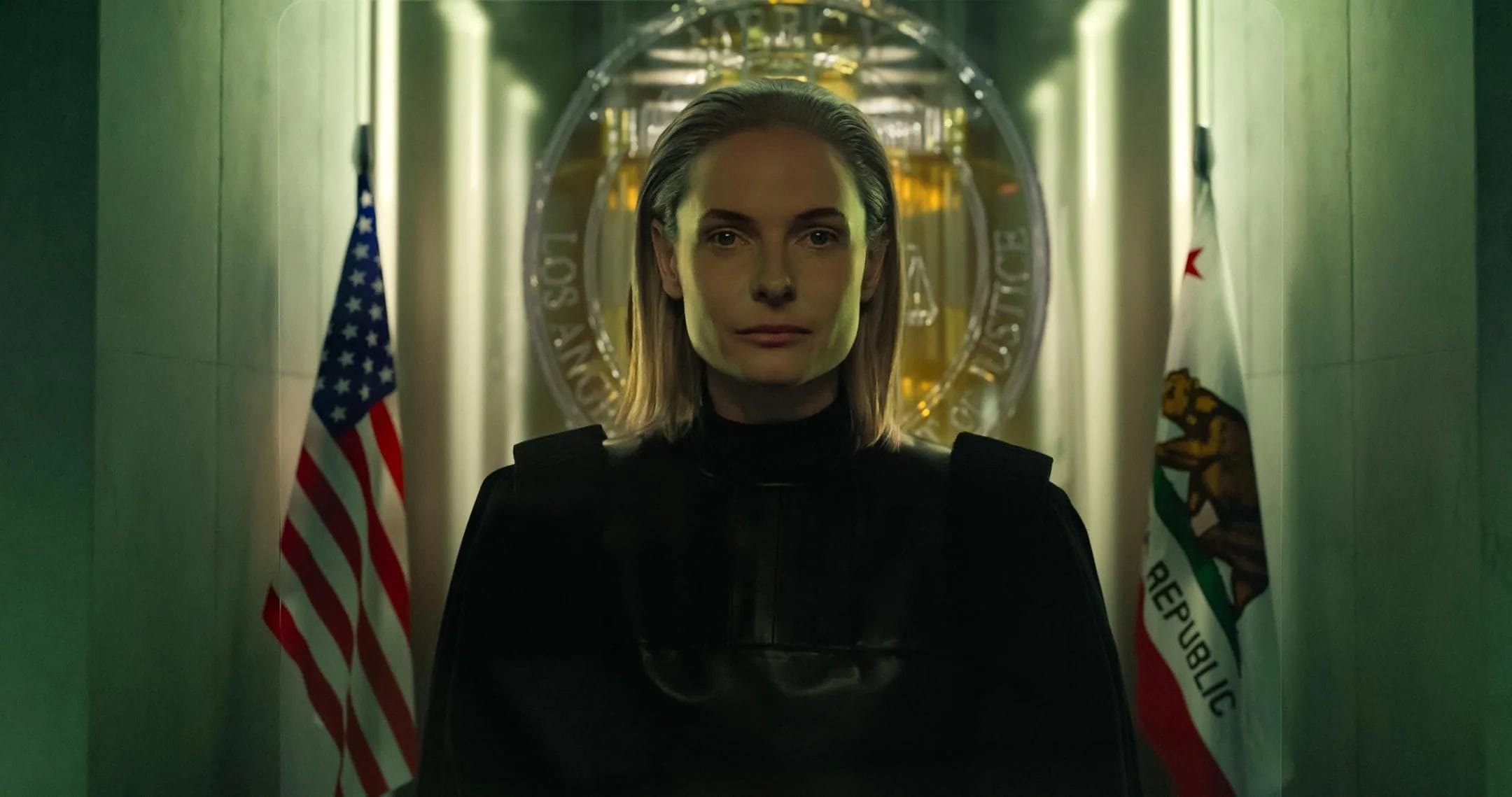
The film essentially splits into two distinct halves. The first is a claustrophobic courtroom drama focused on memory and guilt. The second shifts gears once the inevitable twists are revealed, allowing Raven to use Judge Maddox’s (Rebecca Ferguson) resources to conduct a remote investigation involving his police partner (Kali Reis) and friend (Chris Sullivan).
While the plot beats are predictable and the twist is not particularly shocking to anyone familiar with the genre, Mercy is a serviceable C+ thriller. It does not overstay its welcome and offers enough tension to be worth a watch if you have a spare evening. Expect to see it on Amazon Prime shortly after its theatrical run.
Quick Links
- Tickets: Mercy