Vampire Hunter D: Bloodlust screened this week at the Scotland Loves Anime festival in Edinburgh, offering a chance to see the 2000 adaptation of Vampire Hunter D: Demon Deathchase, the third book in the series, on the big screen.
The film is often accused of being more style than substance. In fairness, that accusation is largely correct, but that is not to say Bloodlust is without merit. It’s a film that absolutely passes the time and can be quite pretty while doing so.
The Bounty and the Beast
The story is set in a far-future, post-apocalyptic world where vampires have ruled the night for millennia but are now on the wane. Humanity has thrived enough to produce powerful bounty hunters who pursue the nobility for gold.
The animation kicks off when a woman is kidnapped from her bedroom by the vampire noble, Baron Meier Link. The taciturn and infamous dhampir, Vampire Hunter D, is summoned by her angry family. They want her brought back safely, or, failing that, “rescued” from the fate of becoming undead.
D heads off after the escaping vampire, but he is not the only one. A rival group of human bounty hunters is on the same route, and the movie follows the two rival hunting parties as they cope with the various obstacles and ambushes left behind by the fleeing Baron, who is determined to escape with the woman.
A Gothic Sci-Fi Symphony
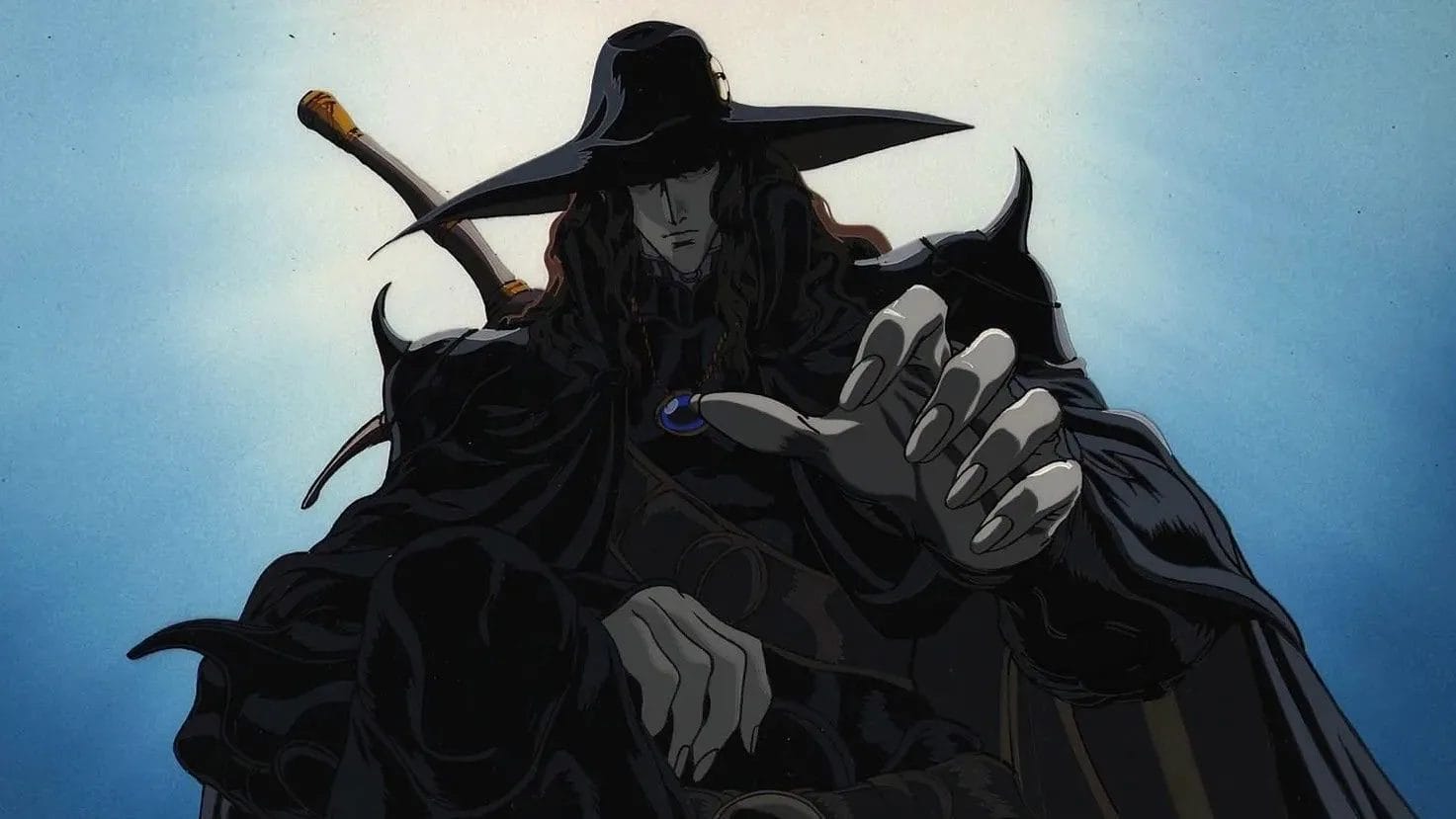
Where Bloodlust truly excels is in its presentation. The soundtrack is superb, an operatic score that perfectly complements the visuals. When the film allows us to see the baroque, gothic architecture of this almost-human world, it is impeccable every time.
Small details also matter. The demonic, cybernetic horses our characters ride and the subtle suggestions of a post-apocalyptic recovery built on lost, advanced technology create a fantastic atmosphere. It’s a world that feels vast and storied, even if the film only shows us a fraction of it.
Style Over Substance
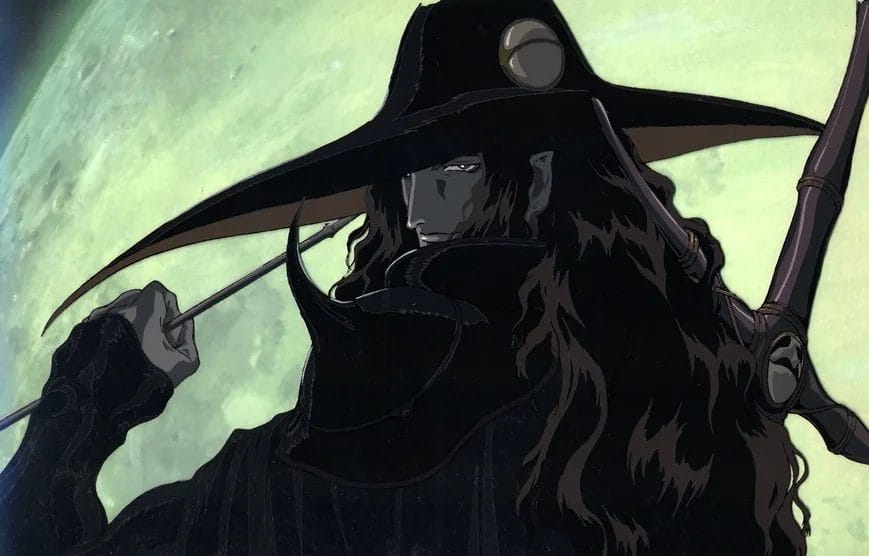
Unfortunately, the film’s narrative does not quite match its aesthetic highs. Bloodlust reaches for tragic gothic romance but never quite gets there.
D himself is far too taciturn to be truly charismatic. The silent, stoic hero is a popular trope, but it is not a guaranteed success, and D lacks the magnetism to carry the film. The human bounty hunters, meanwhile, are perhaps too numerous for the audience to become attached to any one of them. Their fates, therefore, lack impact and serve mostly to distract from the central chase.
This clutters the plot, undermining the chance to build a meaningful relationship with the characters who truly matter. By the time the credits roll, the conclusion feels a little weak, sacrificing narrative achievement for a few final, fantastic scenes.
You can see why Bloodlust is not held up as an all-time classic, but you can also see why it has not been consigned to the archives of failed reboots.
You can vote for Bloodlust in our unofficial SLA-ed fan poll.