In the 11/23 date format, 23 November is Fibonacci Day (1, 1, 2, 3). Last year we drafted a quick necromancer widget for Geek Native to celebrate it, decided the whole thing felt rather half-baked, and quietly binned it.
With 23 November rolling round again, we have rebuilt the barony curse properly. Every innocent slain by a skeleton rises as a fresh skeleton, yet the horde does not double overnight (1, 2, 4, 8). Even the undead suffer from summoning sickness: a newly killed villager spends one full night clawing up through the mud before their bones knit well enough to swing a sword. That single night of lag turns the outbreak into the Fibonacci sequence: 0, 1, 1, 2, 3, 5, 8, 13, 21, 34, 55, 89, 144.
No paladins or war-wizards are riding to the rescue. All the town has is a muddy 24-man Night Watch armed with wooden clubs and horn-lanterns. Worse, the skeletons ambush in the dark before the lanterns reach the street, and it takes three watchmen hammering away with clubs to splinter one skeleton for good. Slide the council delay and muster below to see how long the barony lasts before the dead reach The Royal Coffers.
Why small problems eat whole Baronies
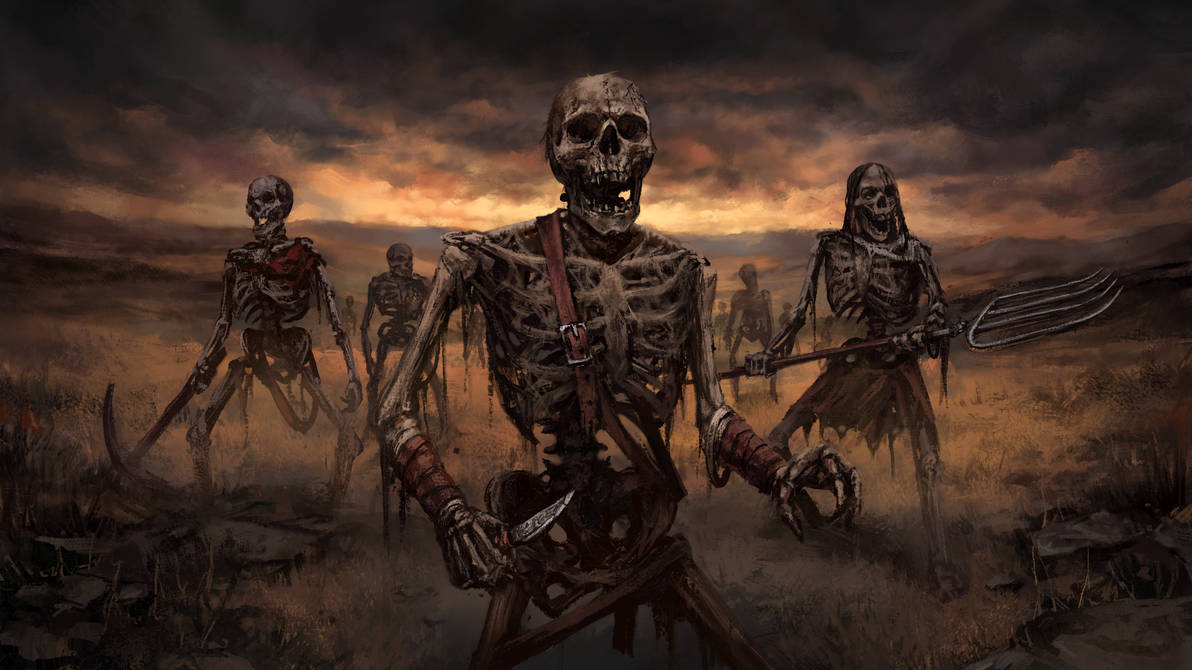
The Night Watch have every disadvantage going: the dead strike before the lanterns show up, and wooden clubs take three men to batter one skeleton apart. Even so, two shivering constables sent out on Night 2 put the entire curse to bed before anyone important wakes up.
Waiting is what sinks the barony. Because the sequence grows by roughly 1.618 every night, every evening the council stalls multiplies the headcount needed with clubs: 4 watchmen on Night 4, 9 on Night 6, 14 on Night 7, 21 on Night 8, and 34 by Night 9 when the Watchhouse only employs 24. Most disasters start small enough to settle with whatever muddy watchman and split cudgel you already have to hand, right up until the afternoon you leave them to fester until 144 skeletons are knocking on The Royal Coffers.
Creative Commons credit: Living Bones by JakubJagoda.

