The physical tabletop is undergoing a digital revolution, but not in the way many expected. While virtual tabletops dominate the online space, a new movement is bringing that same level of dynamic atmosphere back to the physical room. Leading this charge from Lisbon is Perpetual 3Designs.
Founded by João and Mário, the studio, operating under the evocative parent name Feiticeiros da Paz (Wizards of Peace), is currently moving from a successful Kickstarter for “Living Dungeon: Abandoned Keep” into a full retail presence. Their system isn’t just about modular walls; it’s about a “High-Tech Hearth.” Using app-controlled LEDs, environmental triggers, and even experimental “shaking floors,” they are creating a sensory experience that rivals video games without losing the tactile magic of rolling physical dice.
A Q&A with Perpetual 3Designs
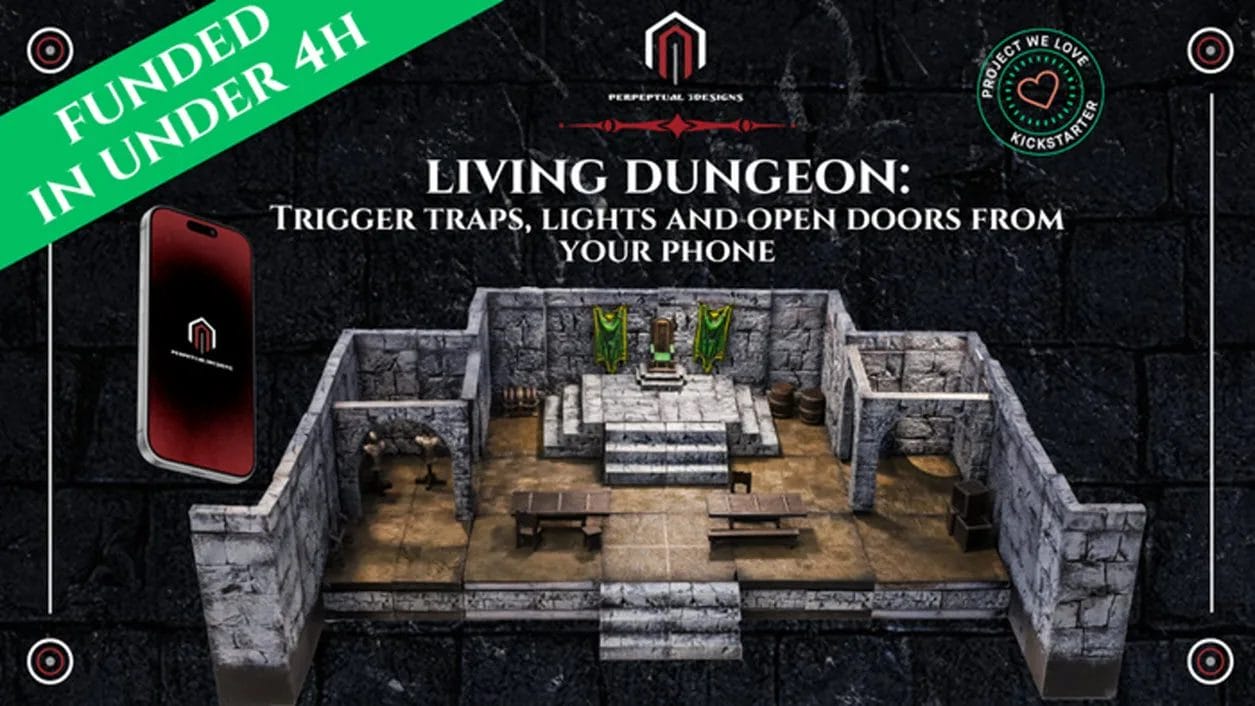
Your parent company, Feiticeiros da Paz (Wizards of Peace), has such a fantastic name! I read that the studio actually started with a simple idea for a wooden dice tray. How did you go from crafting wooden accessories in a shared patio to building high-tech, app-controlled dungeons in Lisbon?
The name Feiticeiros da Paz actually came before everything else and it stuck in a very natural way. In the very beginning, it was just me and Johny building things for our own games, no big plan, just curiosity and a lot of experimentation. The first wooden dice tray came out of a shared patio, with simple tools and a lot of improvisation. When it came time to make things official, a friend of ours who is a lawyer took care of opening the company and, half joking, registered that name. It ended up becoming the financial identity. Perpetual 3Designs came later as the creative face of the project, once we realised we were moving beyond small accessories into building full environments. The transition into more complex builds was gradual, always driven by the same idea of making the table feel more alive.
The Living Dungeon: Abandoned Keep isn’t just static scenery—it uses electronics and a dedicated app to change the mood of the room. How do you balance the “high-tech” features with the “analogue” feel of a traditional RPG? Do you worry about the tech overshadowing the dice, or do you see it as the ultimate DM tool?
For us, technology is never the star of the show. The story always comes first. The Living Dungeon system exists to support the Dungeon Master, not to replace them. We are very careful with how we design interactions. Lighting, environmental changes, and eventually sound (ups, spoiler alert) are subtle and contextual. They are meant to reinforce what is already happening in the narrative. If a room grows darker or a distant rumble starts, it should feel like an extension of the world, not a gadget showing off. We see it as the ultimate tool for immersion, but one that stays in the background. Dice, miniatures, and imagination are still at the core. The tech just gives them a stage.
You’ve made a conscious choice to design at a 32mm scale, which is slightly larger than the traditional 25mm standard. Is this purely to make room for the incredible electronics and wiring, or do you just feel that “epic” stories deserve “epic-sized” maps and miniatures?
The choice of 32mm scale is partly practical but mostly emotional. Yes, it gives us more room to integrate electronics cleanly and safely, but more importantly, it gives presence. When you place a miniature on the table, it should feel like a character, not a token. The slightly larger scale allows for more expressive sculpting, clearer details, and a stronger visual impact. We want the table to feel cinematic. Bigger scale helps players connect with what they are seeing and makes every encounter feel more significant.
While many studios today focus strictly on selling STL files for home printing, you offer fully realised physical products ready for the table. Why was it important for Perpetual 3Designs to handle the manufacturing and painting side of things rather than just staying in the digital space?
We respect the STL community a lot, but from the beginning we wanted to deliver something complete. Not everyone has the time, equipment, or desire to print, assemble, paint, and troubleshoot. We wanted to remove that barrier and offer a product that is ready to use straight out of the box. There is also a level of quality control that matters to us. When we manufacture and paint the pieces ourselves, we know exactly how they will look and function. The Living Dungeon system especially needs that consistency because it combines art and electronics. For us, the physical object is part of the magic. It is something you place on the table and immediately feel.
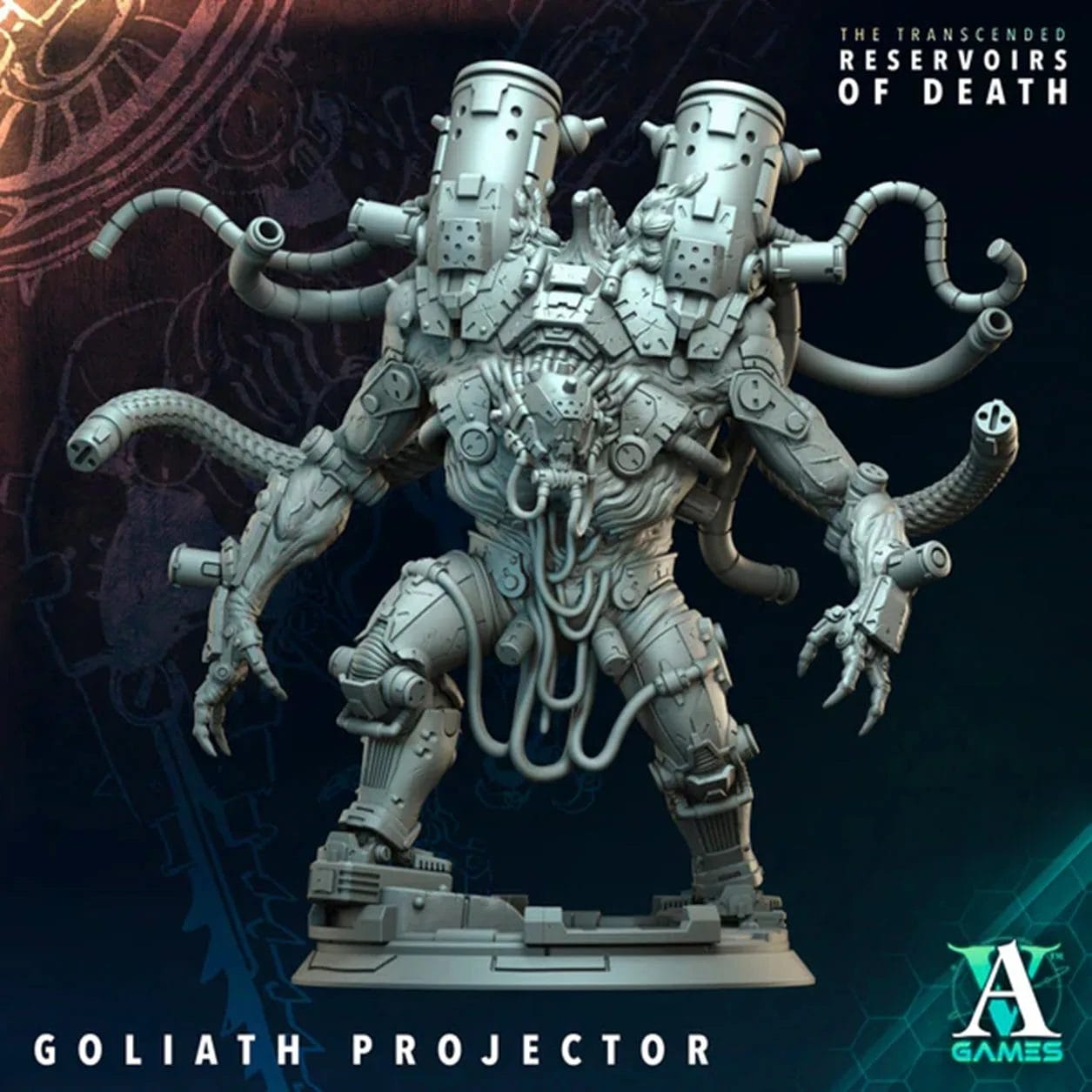
Your “Beasts” and “Colossal” miniatures are genuinely breathtaking. When you are sculpting a massive centrepiece monster, what is the one detail you obsess over the most to ensure that when a DM puts it on the table, the players actually feel a little bit of “tabletop terror”?
When working on a large creature, the detail we obsess over the most is weight in a visual sense. Not just size, but how the creature feels grounded in the world. That comes from posture, muscle tension, balance, and how it interacts with the base. A colossal creature should look like it belongs in that space and could crush everything around it. Small details matter too, like how the skin stretches, where scars sit, or how the eyes are positioned. But if the silhouette and stance do not communicate power, the illusion breaks. We want players to react the moment it hits the table, before a single word is spoken.
The Abandoned Keep Kickstarter has been a massive undertaking and a clear success. Now that the dust is settling on this campaign, can you give us a “sneak peek” into the next environment the Living Dungeon system might explore? Are we heading into deep caverns, sci-fi corridors, or perhaps somewhere even more exotic?
The Abandoned Keep was a huge milestone for us, but it is just the beginning of what the system can do. We are already exploring new environments that push both the narrative and technical sides further. Caverns are definitely on the table, especially with dynamic elements like glowing crystals or shifting shadows. We are also very interested in moving into more unexpected themes, possibly blending fantasy with more alien or surreal spaces. The goal is always the same, to create environments that feel alive and give Dungeon Masters new ways to surprise their players. Terrain is not the only thing we are working on, but that is something we will leave for future conversations.
Verticality and the Future
In a recent appearance on Tabletop Misfits’ “Tavern Talks,” the team touched on the modularity of their system, prompting readers to ask about the potential for multi-level play. With the current 32mm scale providing a sturdy foundation, the prospect of verticality, towers, cliffs, and multi-layered dungeons seems like the natural evolution for a system that already uses the floor to hide its “magical” wiring.
While the Abandoned Keep campaign has concluded its main run, the journey to the High-Tech Hearth is just beginning. For those who missed the initial crowdfunding flurry, the Perpetual 3Designs webstore remains the primary portal for those looking to add a bit of “tabletop terror” and atmosphere to their next session.
Quick Links
Independently covering minis since 2014. Our archive includes 54 entries connected to this topic.
Latest entry: October 2026