The tabletop community is currently buzzing with the news that Luke Gygax is returning to the Flanaess with the announcement of Melf’s Guide to Greyhawk: Borderlands of Iuz. While the project aims to revive the classic grit of the setting, the announcement has pulled a legendary architect of that world back into the light: Pauli Kidd. Before she became synonymous with the theatrical, character-driven soul of Greyhawk through her Classics novels, she was busy orchestrating a mechanical coup that almost deleted the dice bag from the hobby entirely.
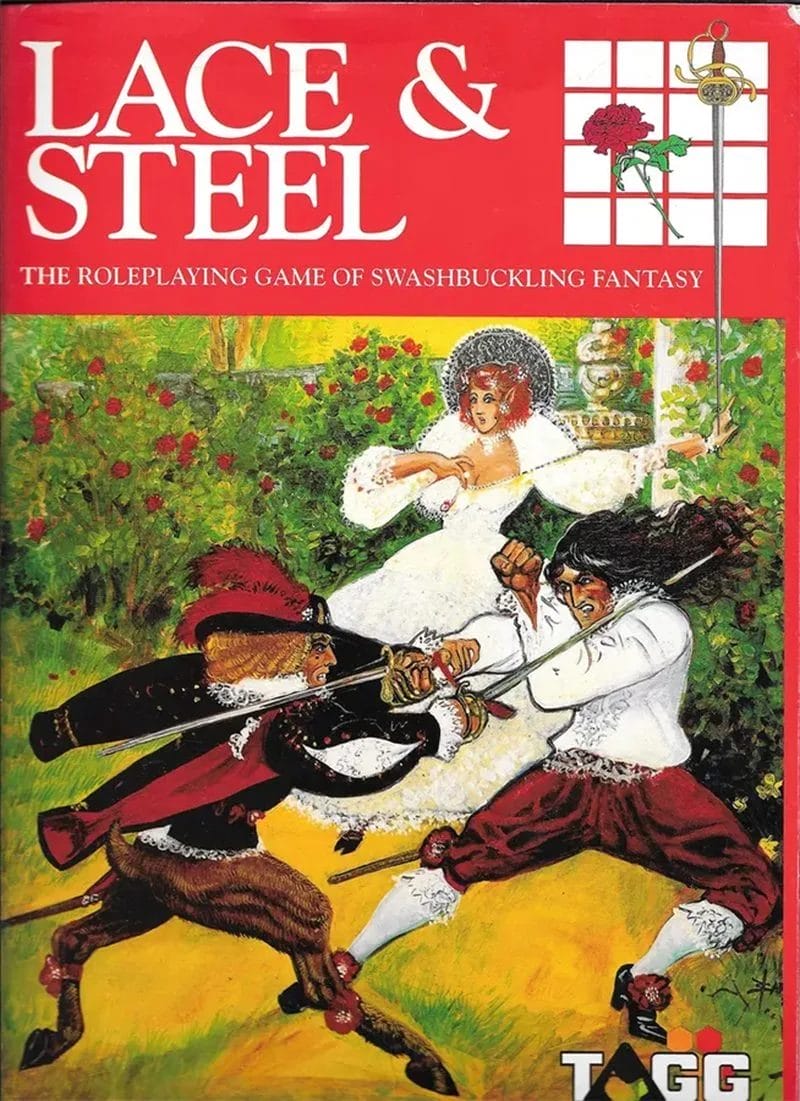
In 1989, when the industry was still knee-deep in “murder hobo” dungeon crawls and the attrition of hit points, Kidd released Lace & Steel through The Australian Games Group (TAGG). It was a stylish, deliberate departure from the status quo. She didn’t just want a different setting; she wanted a different way to play. The result was the first major roleplaying game to bin the physics of the six-sided die in favour of a procedural card engine that prioritised player skill and psychological pressure over simple math.
Killing the “medieval monster bash”
The genius of Lace & Steel lay in its refusal to treat a sword fight like a series of disconnected probability checks. Instead of rolling a d20 to see if a blade hit flesh, Kidd introduced a 52-card combat deck designed to simulate the mental strain and tactical rhythm of a real duel. The system split every exchange into three distinct lines of engagement: Upper, Middle, and Low.
This wasn’t a gimmick; it was a sophisticated attempt to model procedural empathy. When a hit was scored, the suits of the attack and defence cards, Rapiers and Roses, were compared. If the suits matched, the defender parried effectively and drew a card, gaining the stamina to stay in the fight. If they mismatched, the attacker drew “Follow-up Damage,” often ending the encounter with a single, decisive flourish. It turned every duel into a high-stakes game of chicken, where players had to choose between aggressive suit-shifting and risking giving their opponent a second wind.
The social blade: repartee as combat
Kidd’s philosophy extended far beyond the fencing strip. She famously argued that personality should be a core mechanic, leading to the creation of “Repartee.” In Lace & Steel, she ensured that a social conflict was handled with the same mechanical rigour as a physical one. Characters use their cards to erode an opponent’s self-confidence, essentially treating a ballroom debate as a bloodless duel.
Perhaps the most telling detail in the rules is the “Repartee vs. Unskilled Targets” mechanic; a cynical, brilliant simulation of class warfare. A character with high social standing can literally talk circles around an unskilled peasant or soldier. Because the target lacks the mechanical vocabulary to respond with a counter-witticism, they are forced to “dodge” by changing the subject. For Kidd, power wasn’t just about how hard she could make a character hit with a mace; it was about whether they had the social standing to make an opponent look like a fool before the first blow was even struck.
The persistent myth of the “TV series”
There is a long-standing piece of trivia that continues to confuse collectors: the original 1989 core book claims it is based on the “popular TV series Lace & Steel.” There was a Lace series on ABC, but Australian and UK television archives confirm that no Lace & Steel show ever existed. This was Kidd’s most elaborate prank; a piece of fake history designed to give the game an immediate sense of cultural weight. In an era now dominated by official transmedia tie-ins, her joke about a non-existent television show feels like a sharp critique of how we market games today.
While the game’s “Half-Horses” (who find the term “Centaur” deeply offensive) and its female-dominated Harpy culture were decades ahead of their time, the game remains a lost relic of the Australian design scene. As Luke Gygax prepares to take fans back to the Borderlands of Iuz, the legacy of Pauli Kidd serves as a vital reminder that the most compelling moments in roleplaying happen when the mechanics finally catch up to the drama.