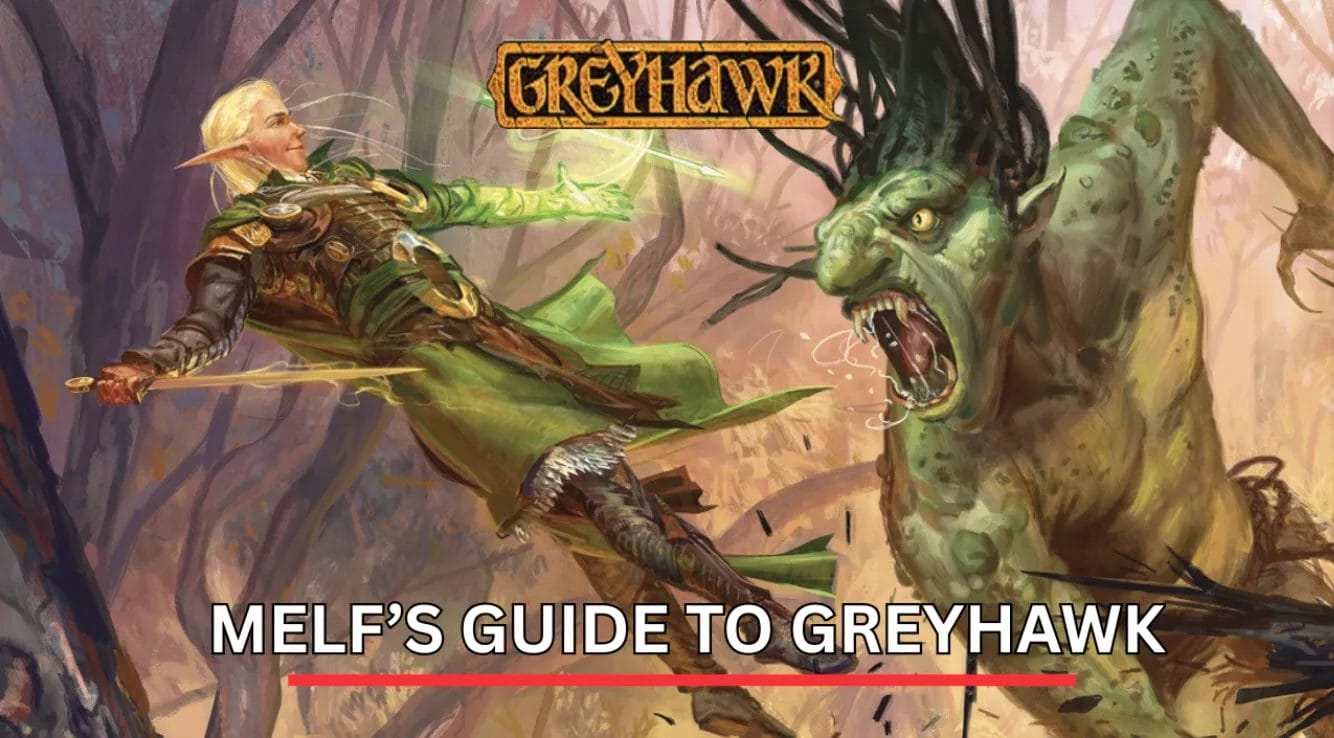
On Thursday, 19 March 2026, Luke Gygax stood on the main stage at Gary Con XVIII in Lake Geneva, Wisconsin, alongside Dan Ayoub, Senior Vice President and Head of Dungeons & Dragons Franchise at Wizards of the Coast. The pair announced Melf’s Guide to Greyhawk: The Shield Lands – an official sourcebook Luke will author for the brand. Ayoub described the collaboration as an effort to “mend the rift between family and franchise,” a move designed to reconcile the Gygax name with the corporate entity that has owned Dungeons & Dragons for nearly thirty years.
Luke’s character Melf, the elven archmage behind Melf’s Acid Arrow and Melf’s Minute Meteors, was one of the first player characters in the history of D&D, created in his father’s early Greyhawk campaign. A Gygax writing an official D&D book for Wizards of the Coast is a full-circle moment. It also brings the long-running Gygax controversies back into focus – the legal battles, the cultural friction, and a fractured family history that has occasionally spilt into very public view.
The Arneson Royalty Dispute (1979–1981)
The foundational Gygax controversy involves the authorship of D&D itself. Dave Arneson’s “Blackmoor” campaign introduced individual heroes, experience points, and dungeon delving. Gary Gygax took that framework and built a publishable, codified game. When D&D was published in 1974, Arneson was credited as a co-creator and received royalties. The trouble arrived when Gygax launched Advanced Dungeons & Dragons and argued that Arneson’s original 1974 contract did not apply to the new product.
Arneson sued TSR in 1979. The case was set to go to trial before a settlement was reached in March 1981, granting Arneson a 2.5% royalty on core AD&D books and a permanent co-creator credit. A further suit over the Monster Manual II followed in 1984, which Arneson won. The professional relationship never fully recovered, though Gygax later contracted Arneson to write the “DA” series of adventure modules during the mid-1980s. Both men died within thirteen months of each other: Gygax in March 2008, Arneson in April 2009.
The Hollywood Years and the TSR Ouster
The mid-1980s brought a second wave of controversy. TSR’s explosive growth had masked deep financial challenges and mismanagement by the Blume brothers, who had quietly accumulated a controlling interest in the company. Kevin Blume became president of TSR Inc., and Gygax was packed off to Hollywood as president of TSR Entertainment. While the D&D animated series became a genuine hit, a feature film never materialised.
Returning to find TSR in financial crisis, Gygax persuaded the board to remove Kevin Blume – but the move backfired. Lorraine Williams, whom Gygax had brought in as an investor, manoeuvred into the resulting vacuum. After the Blumes sold their shares in October 1985, Williams engineered Gygax’s ouster from the company he had founded.
His subsequent attempt to build a competing system, Dangerous Journeys (1992), was met with a lawsuit from TSR alleging intellectual property infringement. TSR eventually bought the rights in 1992, effectively to bury the system rather than publish it.
Biological Determination and Women in Gaming
Gygax’s views on gender remain among his most criticised. In a post on the Dragonsfoot forums, he described himself as “a biological determinist,” stating he was “positive that most females do not play RPGs because of a difference in brain function”. He repeated similar views to Icon magazine, calling gaming “a male thing” and arguing that the different thinking processes of men and women explained why attempts to design games for female audiences had failed.
These remarks, contested even at the time, shaped how the early game was marketed, creating a self-fulfilling demographic dynamic the industry spent decades unwinding. Modern editions of D&D have moved away from fixed racial ability modifiers and other inherited design assumptions that reflected this philosophy. Similarly, the 1985 supplement Oriental Adventures, written under Gygax’s watch, drew criticism for reducing Asian cultures to a catalogue of exotic tropes (a criticism the hobby has revisited repeatedly).
The NuTSR Crisis and the Family Split
Perhaps the most damaging recent chapter in the Gygax controversies erupted in 2021, involving Gary’s eldest son, Ernie Gary Gygax Jr. Ernie had become associated with a group calling itself TSR Games, dubbed “NuTSR” by the community, which was attempting to revive the TSR trademark under Justin LaNasa.
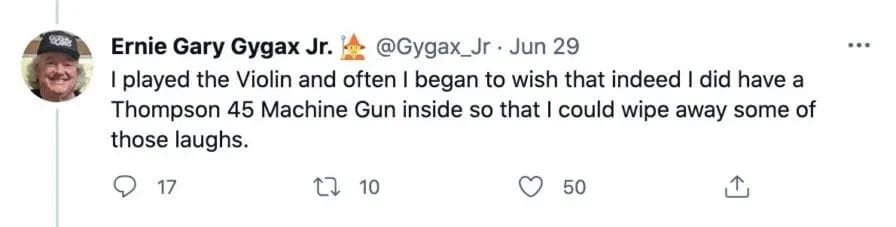
The controversy intensified during a 2021 interview, in which Ernie Jr. expressed frustration about his childhood experiences of being bullied for being a “nerd.” He remarked that as a young violin player, he “often began to wish that indeed I did have a Thompson .45 Machine Gun inside so that I could wipe away some of those laughs”. While framed as a childhood fantasy of retaliation, the comment was widely perceived as hostile within the context of an interview that also disparaged modern “inclusive” trends in gaming.
The backlash was severe. Luke Gygax, Heidi Gygax, and other family members publicly rejected the NuTSR group’s claim to represent the estate, making clear that the organisation did not speak for the family. The Dungeon Hobby Shop Museum in Lake Geneva, located in the original TSR headquarters, became collateral damage, its reputation entangled with the trademark disputes. This split paradoxically cleared the path for the 2026 reconciliation; by unambiguously separating himself from these controversies, Luke was able to open a genuine dialogue with Wizards of the Coast.
The 2026 Reconciliation
When Wizards of the Coast purchased TSR in 1997, Peter Adkison bought out Gygax’s residual D&D rights for a six-figure sum. But the relationship faded, and after Gygax’s death in 2008, the family’s connection to official D&D became increasingly distant. Luke built his own legacy, founding Gary Con in 2009 and launching the Castle Zagyg project in 2025.
The March 2026 announcement signals a decisive shift in the relationship between the estate and the brand. Industry reports following the event indicate that Ayoub apologised to Luke Gygax privately for the historical treatment of the family, framing their collaboration as a unique opportunity to resolve a rift that has lasted four decades. This renewed partnership results in The Shield Lands, a sourcebook featuring new cartography by original Greyhawk artist Anna B. Meyer and a cover painting by Jeff Easley. In a standout moment from Gary Con XVIII, the original Easley painting was purchased for $5,000 at the charity auction by actor Vince Vaughn, who then gifted the artwork back to Luke.
Timeline: The Arc of the Gygax Controversies
Dungeons & Dragons published by TSR; Dave Arneson credited as co-developer.
Arneson files suit against TSR over Advanced Dungeons & Dragons royalties.
Settlement reached; Arneson receives 2.5% royalty and permanent co-creator credit.
Gygax moves to Hollywood as president of TSR Entertainment to pursue media deals.
Gary Gygax is ousted from TSR by Lorraine Williams following a boardroom struggle.
Gygax publishes Dangerous Journeys; TSR sues immediately for intellectual property infringement.
Wizards of the Coast acquires TSR; Peter Adkison purchases Gygax’s residual D&D rights.
Gygax makes controversial “biological determinist” comments regarding women in roleplaying games on the Dragonsfoot forums.
Gary Gygax dies in Lake Geneva, Wisconsin, aged 69.
Ernie Gygax Jr.’s interview and the “NuTSR” trademark battle spark a community crisis; Luke Gygax publicly distances himself from the group.
Luke Gygax and Dan Ayoub announce Melf’s Guide to Greyhawk: The Shield Lands, returning the Gygax name to official D&D.
The return of the Gygax name to official D&D represents more than just a marketing victory; it is a careful negotiation with history. While the OSR community’s response remains mixed, the collaboration suggests a desire to move past decades of animosity. Luke Gygax is not his father, but as someone who actually sat at the table where the hobby began, his involvement lends a sense of closure to a franchise that has long struggled with its own origin story.