The world of tabletop RPGs often focuses on high adventure, dungeon delving, or cosmic horror, but sometimes the stakes are much smaller.
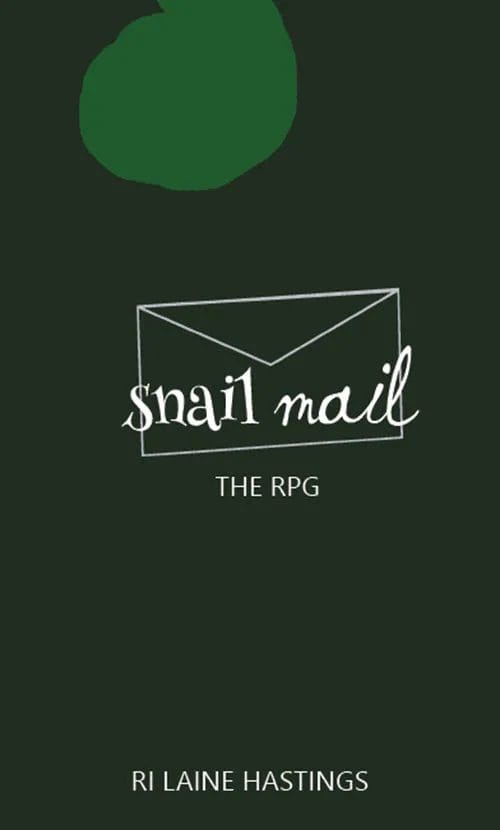
In Snail Mail: The RPG, released by Slug People Games, players take on the role of a gastropod postal worker delivering mail to a tiny community. Written and illustrated by Ri Laine Hastings and edited by Samuel Rickard Hastings, this game offers a slice-of-life experience in which the primary objective is to ensure parcels reach their destination, whether that is a rotten tree or a city building.
It is designed to be played either as a solo journaling game or with a group of up to four people. While the premise is charmingly low-stakes, the life of a snail is not without its perils, from aggressive spiders to the existential threat of salt packets.
Character Generation
Creating a character in Snail Mail: The RPG is a quick, randomised process driven by drawing from a standard deck of playing cards. There are no complex statistic blocks or skill trees here; instead, the game asks you to define who your snail is through prompts determined by card suits. You might discover you are delivering mail because you “like to stay busy” or perhaps because you “have an ulterior motive”.
A significant part of your character’s identity is their shell, which serves as both home and transport. Players start with three items to decorate their shell, which are also determined by drawing cards. These items range from the whimsical “Tiny Jar of Fairy Dust” to the practical “Sewing Needle,” and you must decide which to keep for utility and which to discard. The system eschews traditional health or armour stats, relying instead on your chosen items and pastimes (such as being a chef or an athlete) to help navigate challenges.
The System
The game mechanics are light and utilise a standard 52-card deck (Jokers removed) alongside a twelve-sided die (d12). The core loop involves a “day” of work, during which you deliver a number of parcels determined by a die roll. Each parcel is represented by a card drawn face-up; the rank of the card dictates the destination on the map, while the suit determines what you encounter along the way.
When a challenge arises, be it a dangerous encounter or an attempt to trade an item, resolution is handled by a simple check. The player draws a card to set a difficulty rank and then rolls a d12. If the die roll plus one meets or exceeds the card’s rank (where a King is 13), the action is successful. This applies to combat, avoiding danger, or social interactions. While the mechanics are straightforward, the game places the burden on the player to narrate the specifics of their success or failure.
The Setting and Atmosphere
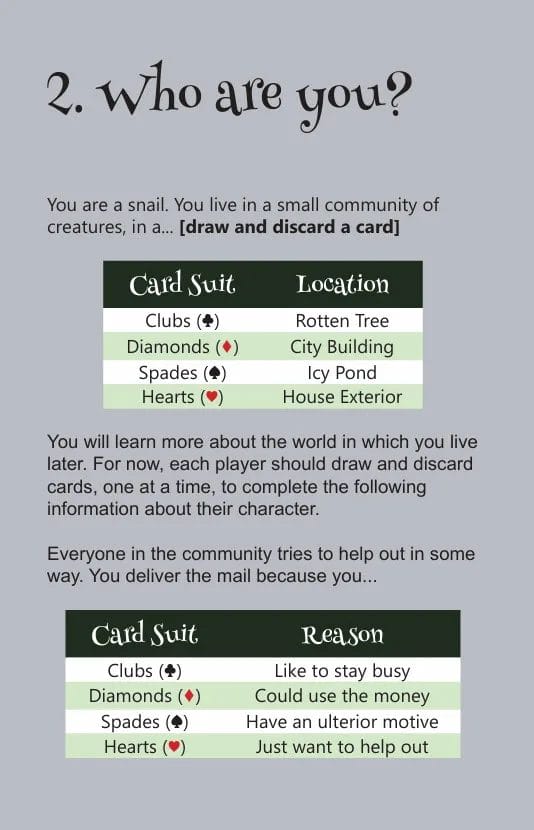
The setting is viewed entirely from a micro-perspective. Maps are provided for four distinct environments: the Rotten Tree, City Building, Icy Pond, and House Exterior. These locations are teeming with life, populated by wood ants, beetles, and other small creatures.
The tone oscillates between cosy and hazardous. On one hand, you might be an artist playing “The World’s Smallest Violin” or sharing a meal made from a “Grain of Rice”. On the other hand, the Encounter table ensures that travel is rarely uneventful. Drawing a Spade triggers “Danger,” which could be anything from a hailstorm forcing you into your shell to being kidnapped by bounty-hunting ants. Conversely, drawing a Heart introduces a “Friend,” allowing for moments of respite and connection with other species, such as moths or caterpillars.
The game concludes when an encounter ends the story, the players decide they need a vacation, or the characters reach a “point of no return” without the resources to continue. It is a system that seems best suited to short, narrative-focused sessions, where the joy comes from interpreting the prompts rather than from tactical crunch.