In an era where the tabletop roleplaying game industry is fiercely debating the role of artificial intelligence and battling digital fatigue, a new Kickstarter campaign is offering a refreshing, analogue alternative. When Society Collapsed: Dam Nation, created by Toronto-based Australian animator Luke Humphris, has taken the crowdfunding platform by storm, amassing over £346,000 against a modest £29,000 goal.
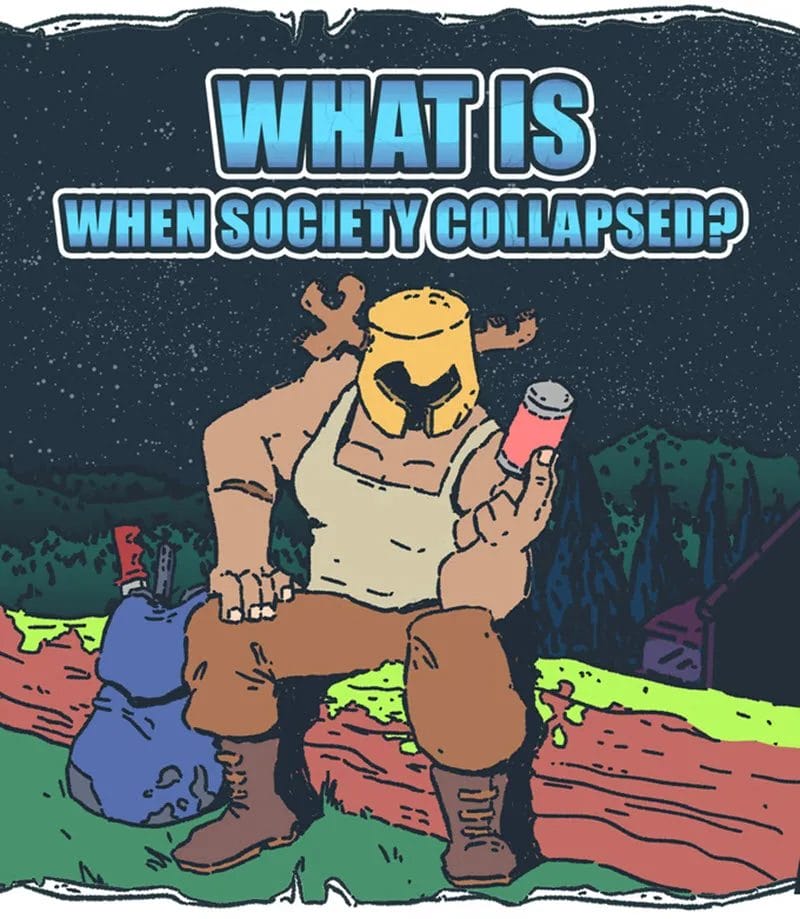
Based on Humphris’s popular animated YouTube series, which boasts over 550,000 subscribers, this rules-light roleplaying game explores a post-apocalyptic setting defined not by radioactive mutants but by peaceful autonomy. The campaign, which runs until May 1, 2026, challenges players to rebuild communities, manage stamina instead of hit points, and explore a beautifully crafted physical world that firmly rejects generative AI.
The transition from a hit YouTube series to a fully fleshed-out roleplaying game is a demanding process. Humphris has redesigned traditional tabletop mechanics to fit the melancholic, hopeful vibe of his world, shifting the focus away from constant combat toward survival and community-building.
You’ve described When Society Collapsed as a tale of “peaceful autonomy.” What was the spark that made you want to explore the “nice” parts of the end of the world?
Most post-apocalyptic stories are criticizing the modern day, with an emphasis on the inhumane practice of nuclear weapons. A warning of where we might end up if we continue down certain paths. Similarly, my series only explores activities that people could be doing now, sharing art, growing food, building communities. The criticism being that the systems we live in makes it extremely difficult to have time to do these very simple activities, and that we could find relief in the absence of them, even if the quality of life is lower.
Your YouTube community is massive. What was the “Aha!” moment when you realised these animated shorts needed to become a fully-fledged TTRPG rather than just more episodes?
There was demand from my audience, and a few were already making their homebrews in the world. So it was something I wanted to build out for everyone, there is a lot of lore about this world I have not put into these zoomed in short stories that helped build out this game.
There’s a beautiful quote in your materials: “Do you still plant flowers when it has all fallen apart?” In a genre usually defined by “raiders and radiation,” how does that philosophy translate into actual tabletop gameplay?
Role-playing and autonomy go hand in hand, there are far less barriers on what players can do in a ttrpg compared to a board game or a video game. Dam Nation has a larger plot of finding out who stopped the Dam from flowing, but to find out you will need to explore a large map and you will run into many encounters that may not have an obvious solution. So the how, why and even if you will change something, is completely up to the party in a way the TTRPGs can deliver.
Mechanics: Stamina over Survival
At the mechanical heart of the game is a stark departure from standard combat-heavy roleplaying games. Instead of tracking hit points solely as a measure of physical damage, players manage stamina through reusable trackers. This resource dictates how much a character can endure in a given day, whether that involves fighting off scavengers or simply clearing rubble to help a neighbour.
You’ve ditched the traditional single-use character sheet for reusable stamina trackers. What led to that design choice, and how does “stamina” change the way players think about their characters compared to standard “Hit Points”?
I really wanted the players to feel like they are enduring this world, and traditional hp in tabletop games is only an injury indicator. However in this world if you spend the whole day helping some move rubble out the way, that needs to be a cost. The stamina also means you cannot keep exploring forever, you need to stop and recharge and that makes food extremely important to your party. Food in the apocalypse is valuable. Additionally, having different attributes make sense. The strong guy can swing a stick for much longer than most, but in turn the engineer is going to be able to scrap and repair items longer. Pacing yourselves, and covering your party member’s weaknesses are important.
How much of the animation “logic” or visual storytelling style did you have to “translate” into game mechanics? Was there anything that worked perfectly in a cartoon but was a nightmare to turn into a rule?
The world is mostly peaceful, so implementing combat in a way that was still part of this peaceful or melancholy world, but not being condescending towards players was a major concern. So you are a lot less likely to find your party vs another party to the death. Wild animals attacking you, natural disasters, raiders grabbing your food and running away. Very few npcs will fight to the death, they will want to get out of there if they are hurt and in an unwinnable situation. When a battle map is pulled out and you are put in a scenario, you will have to figure out what your priority is in this situation. There is nothing stopping you from putting a hammer to every hungry mouth you find out there and taking their stuff, but you will be leaving a very empty world behind.
The Engineering Marvel: The Battle Van
One of the most striking physical elements of the campaign is the Battle Van, a pop-up papercraft piece designed by award-winning paper engineer Simon Arizpe.
The “Battle Van” is easily one of the most tactile, unique components I’ve seen in a game box. How did the collaboration with Simon Arizpe come about, and what was it like seeing your 2D art turn into a 3D pop-up “book nook”?
It was incredible to see, Simon is extremely talented and he knocked it out of the park. It was a very smooth collaboration because he did all the hard work, I described what I was looking for and he built a prototype that I basically painted. It is one of my favourite parts of the system and you really have to give the praise to him.
Since the Battle Van is customizable with pop-up upgrades, does it function as a sort of “physical character sheet” for the party’s home base?
Yes! It will ‘level up’ as you scavenge new pieces, and these pieces can add more abilities to do during the camping phase. For example if you find the medkit a player will be able to spend their evening tending to their wounds to heal a bit more. That being said, if you are just using the campaign book you will still be building up a campsite even without the physical model.
The “No-AI” Commitment
As the tabletop community continues to grapple with the influx of generated content, Humphris has taken a definitive stance. The campaign prominently features a “Created by Human Brain” seal, assuring backers that the art, writing, and design are entirely organic.
You’ve been very vocal about your “No-AI” commitment, even including a “Created by Human Brain” seal on your materials. Why was it important to make that such a core part of your brand identity for this project?
I wanted to put it up front for anyone who doesn’t know my work and is seeing it for the first time. Most audiences know that AI generated work is the cheapest and laziest option, so it was a quick way to let people know I am not filling up the gaps with sawdust.
Do you think the TTRPG community, in particular, is looking for that “human touch” more than other industries right now?
Absolutely. TTRPGs require a level of depth for people to play in their worlds, and generated art and writing ruins the cohesion of those worlds.
What would you like to be best known for, the animation, the game design, or simply being a “Good Idea haverer”?
I genuinely don’t care, I just want to be able to make stuff.
If you could give one piece of advice to a player who just stepped out into the world of Dam Nation for the first time, what would it be?
This world doesn’t have plans for you, what plans do you have for the world?
Pledge Highlights
For those looking to back the project, the campaign avoids bloated menus in favour of a straightforward selection. Whether you prefer a streamlined digital approach or want the full tactile experience, there is an entry point for every table. The standout options are:
- Pledge $30 (approx. £23): Digital. Grants access to the PDF rulebook and every digital item in the campaign, ideal for virtual tabletops or those who prefer reading on screens.
- Pledge $45 (approx. £34): Book Only. Secures the physical hardcover campaign book for When Society Collapsed: Dam Nation, plus all the digital bonuses, perfect for game masters building their physical library.
- Pledge $99 (approx. £74): Core Box. This tier delivers all the essentials to run a campaign, including the main book, maps, wooden minis, reusable stamina trackers, and all condition, class, and camp cards.
- Pledge $275 (approx. £205): Deluxe Box. The ultimate package includes everything from the Core Box and Merch tiers, plus the incredible pop-up Battle Van with 20 upgrades, a GM screen, overgrown dice, and a custom pen and journal.
When Society Collapsed: Dam Nation is an all-or-nothing project. The campaign will only be funded if it reaches its goal by Friday, May 1, 2026, at 3:00 AM BST. Startide Labs, managing the production and fulfilment, estimates that physical rewards will begin shipping to backers in May 2027.


