While the tech world buzzes about the LEGO Group’s recent unveiling of SMART Play, and Geek Native has previously reported on the arrival of these “digital brains” in the Star Wars line, some engineers are advising a moment of pause.
Patrick Faulkner, Lead Engineer at precision component specialist Accu, has cautioned that while the technology is impressive, it shouldn’t replace the foundational “low-fidelity” skills that future engineers actually need.
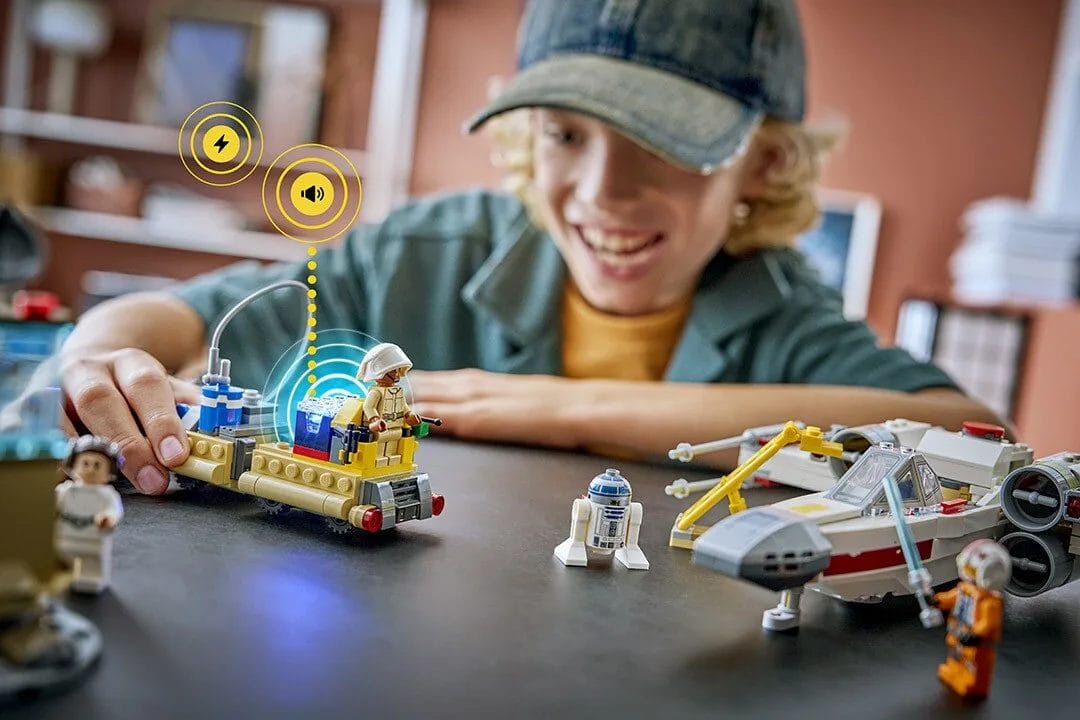
Faulkner argues that the new tech, which you can view in detail on the official LEGO Smart Play site, functions best as a sophisticated layer rather than a starting point. For the Geek Native audience, often balancing their own hobby time with raising the next generation of gamers and makers, the advice is clear: these sets are technically marvels, but don’t let the batteries distract from the build.
LEGO’s new SMART Play technology can make play more engaging, as long as it’s used to enhance creativity, not replace it. In my view, it works best as a layer added to traditional building, rather than a starting point.
As an engineer, I know that playing with technology at a young age can do wonders for creativity and problem-solving, but only when it’s built on strong foundations. Before children introduce tech into their play, they need time to develop core skills such as structure, stability, and problem-solving through imagination alone.”
The engineer specifically advises against introducing the tech-heavy sets to children under five, noting that 90% of brain development occurs by that age, a period best spent on “technology-free skills.”
Low-Fidelity Prototyping
For the adult builder and the tabletop GM looking to craft terrain, Faulkner highlights that LEGO remains a valid tool for “low-fidelity prototyping”, industry speak for quick-and-dirty modelling to test concepts. This is where the Star Wars sets might eventually find a second life on the gaming table; not for the “whoosh” noises detailed in our previous coverage, but for the mechanical potential of the parts.
LEGO stands out as a low-fidelity prototyping tool because of its versatility, accessibility in education environments and ease of modification. LEGO engineering sets come with modular pieces that snap together seamlessly, letting designers experiment with structural layouts and simple design ideas, including mechanical functions, at minimal cost.
When something doesn’t work, you can quickly disassemble and rebuild it, making iterations both fast and intuitive.”
Engineering at the Kitchen Table
Accu provided a breakdown of how “play” translates to engineering principles, many of which mirror the logic used in tabletop roleplaying games. They suggest introducing “design constraints”, a concept familiar to any GM who has had to improvise a rule to stop a player from breaking the game.
By giving young builders specific limitations (e.g., “It must fit on this table” or “It must lift this specific toy”), they learn to work within a rule set, a critical skill for both engineering and RPGs. Faulkner also suggests a “wobble test”, gently pressing on a structure to test stability, which teaches the physical realities of weight and support.
Even the inevitable disasters have value. Ben Massey, a customer success coordinator at health and safety software provider innDex, points out that a LEGO collapse is a safe way to learn about catastrophic failure.
Using LEGO as a building tool taught me as a budding engineer about incidents and near misses in a controlled and playful environment. A collapsing LEGO tower becomes a physical metaphor for structural failure without any real danger, and it teaches you as a child to test different builds and be cautious of failure in the future.”
The new SMART Play sets are available for pre-order, with the hardware debuting in the Star Wars line. For those looking to stick to the bricks without the chips, or to grab the new sets, retailers like Zavvi continue to stock a wide range of the plastic bricks.