The gaming market is saturated with historical games set in medieval Japan (Assassin’s Creed Shadows, Ghost of Yotei, Ghost of Tsushima, Sekiro: Shadows Die Twice) and Soulslikes. Nioh 3 is both of these things so the narrative of the game, from TeamNinja’s perspective, has to be: how does it stand apart from the crowd?
I must admit, when, in the game’s opening cutscene, I heard the familiar roll call of names, from Hattori Hanzo to Oda Nobunaga and Tokugawa Iewasu I couldn’t help rolling my eyes. It didn’t help that I played the game straight after Assassin’s Creed Shadows.
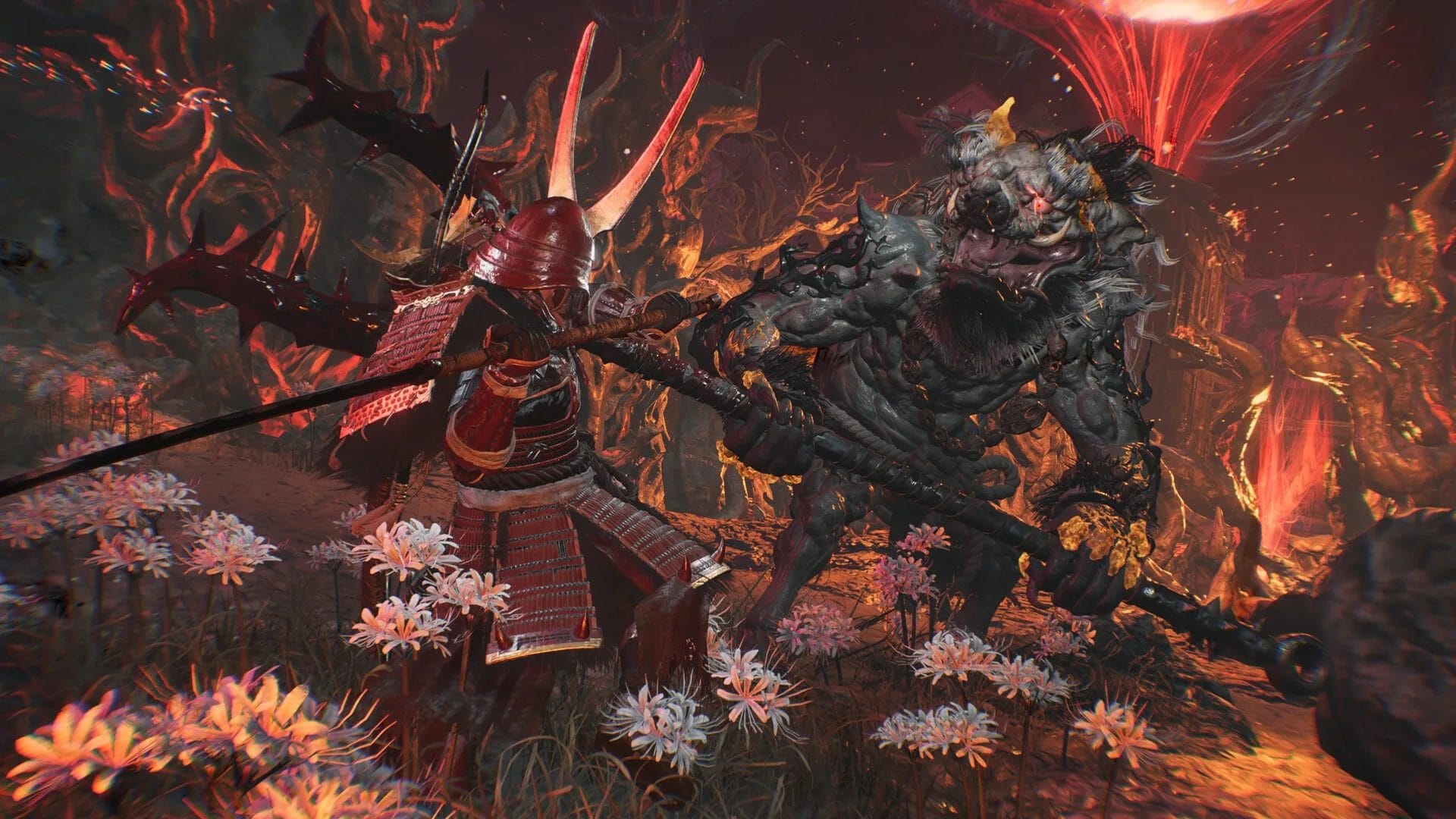
And because I played it right after Shadows and because I work in art history I couldn’t help but be struck by the differences in presentation between the two games. Shadows is to Nioh 3 what a portrait by Rembrandt is to a caricature.
Graphically and in terms of polish, Nioh 3 feels sub-standard. It feels like diving into an arcade game more than a serious AAA next-gen entry. This isn’t new criticism for TeamNinja: Rise of the Ronin and Strangers of Paradise were similarly lambasted for their lacklustre graphics and environments. This criticism is even more damning when Nioh 3 shares a field so wonderfully saturated with graphical masterpieces, like Shadows, Elden Ring, Ghost of Yotei and so many others.
So why then is Nioh 3 so much more addictive than all those other competitors? Why can’t I put it down?
I don’t think it’s an exaggeration to say that Nioh 3 has the best combat in the entire genre. And this is what makes it stands out, heads and tails above the crowded field of competitors. Even over its the standard-bearer, Elden Ring – and this has to do not just with combat mechanics but the sheer addictive joy of modifying, expanding, expressing your character’s fighting styles that doesn’t get old even over 40 hours in.
There is a lot to learn in the game. Guardian spirits that you can equip for special moves and perks. Soul cores that you can equip in the Yin and Yang position that either enhance stats or allow you to unleash particular Yokai in battle. Martial arts that you learn from different weapons. Samurai and Ninja skill points that help open up a significantly expansive skill trees.
Then of course there is the loot. This is TeamNinja, after all. The loot is endless and it can be overwhelming. But the quality of life upgrades from previous Nioh games such as automatic equipping make the bureaucracy of loot-management as addictive as catching Pokemon or Sudoku!
The different systems mesh together and really shine in the new (for Nioh) open-world setting. Many comparisons have been made with Elden Ring, naturally, with cynics lazily arguing that TeamNinja is just hitching a ride off FromSoftware’s latest and most innovative behemoth. But these open worlds are not the same species.
Nioh 3’s open world(s) are limited maps set across four different time periods from Japan’s history. It is incredibly satisfying to travel varied periods from Japanese antiquity to a dystopian version of the 19th century Bakumatsu period, but here, again, the lack of graphical polish and sophistication is a frustrating letdown. I couldn’t help thinking that if these settings were handled by Ubisoft or Sucker Punch this game would have been orgiastically beautiful.
The open world is more Ubisoft than FromSoftware in that every area and region presents players with a set of activities to complete to improve the exploration level of a set region. And these activities are excellent set-pieces that enable Nioh 3 to do what Nioh 3 does best: combat. Activities like Crucibles and Enemy Camps give players an opportunity to test their mettle, experiment with different builds, and it is satisfying, really satisfying, to see these activities through.
The game invites you to undertake these activities because it rewards you generously, with Amrita (experience points), equipment, soul cores, Kodamas that give blessings at shrines, and so much more. All these rewards and upgrades significantly beef up your character to make this, by some stretch, among the easiest Soulslikes on the market (and I’m not complaining). Although it is fair to say there is a sharp difficulty spike in the later segment of the game.
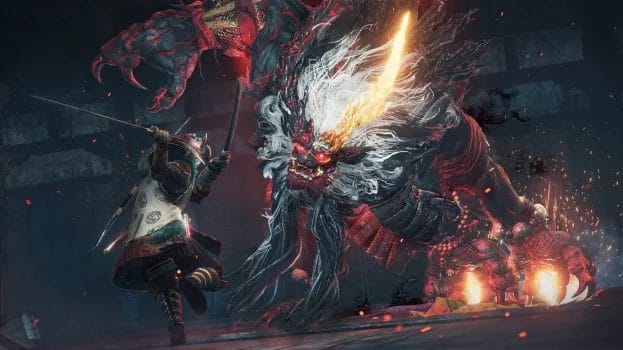
Enemy variety is strong, and even returning yokais from previous entries have new tricks up their sleeves that keep you on your toes. Artistically, Nioh 3’s yokai are the most exciting feature of the game. Even some of the early game yokai, like the Gaki, faithfully recapture their presentation in Japanese art. Similarly exciting/terrifying is the Karasu Tengu.
Whilst Nioh 3’s polish fails to do justice to its setting, it certainly leaves little to be desired regarding its mythology. The term Nioh itself means ‘Benevolent King’ or ‘Two Kings’, a reference to two deities that stand guard at Buddhist temples. The Rijksmuseum in Amsterdam owns two delightful 14th century statues of the two deities. So Nioh 3 provides its players with plenty of opportunities to learn and indulge in this exciting (no wonder it is so over-saturated) historical period. And to be doing all that whilst enjoying the most satisfying combat loop of a generation, makes the game a must-play. It may lack polish but Nioh 3 can easily stand proud, like its guardian namesakes, at the gates of RPG greatness.