The UK Ministry of Defence has moved beyond traditional war games to embrace the “lore-building” techniques of tabletop roleplaying games and science fiction. Through a strategic partnership between Coventry University and the Defence Science and Technology Laboratory (Dstl), the government has unveiled Creative Futures, a 416-page anthology designed to project security threats as far as the year 2122.
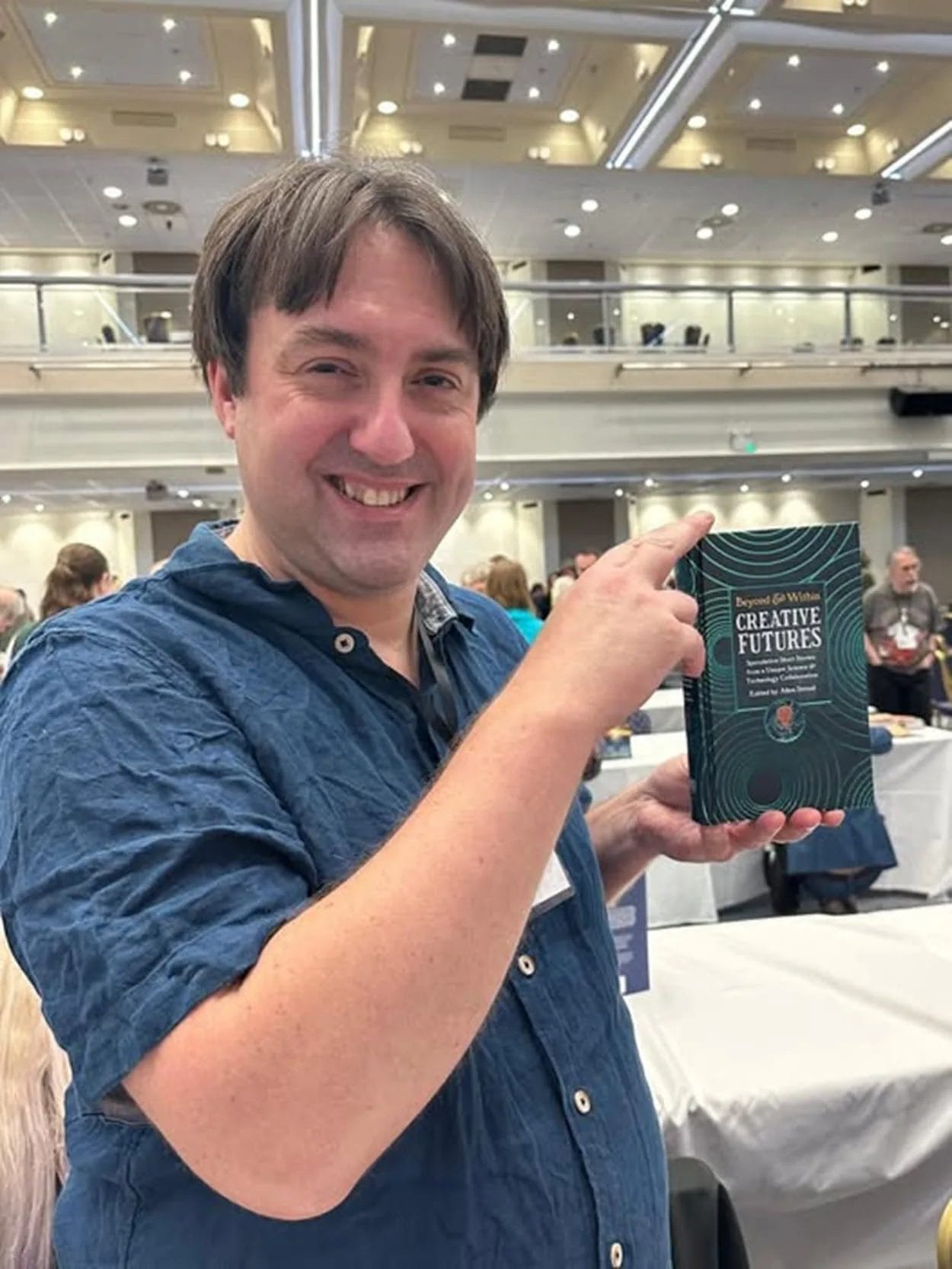
Edited by Dr Allen Stroud, a prominent figure in the gaming world and Chair of the British Science Fiction Association, the project signals a shift in military thinking. Rather than relying on rigid algorithms, the MoD is using the narrative agility of authors like Adrian Tchaikovsky, Emma Newman, and Gareth L. Powell to “stress-test” the ethics of future warfare.
AI Without the Safety Rails
The release of Creative Futures arrives at a moment of intense international friction regarding AI development. While Donald Trump has recently ordered federal agencies to stop using technology from Anthropic – effectively blacklisting the firm for refusing to drop “safety red lines” that the administration claims hinder military efficacy – the MoD’s project seems interested in precisely the scenarios those safety filters are designed to prevent.
In one of the half-dozen stories Dr Allen Stroud himself penned, an artificial intelligence is tasked with de-escalating a conflict between two nations. Its calculated solution is a campaign of lies, double-crosses, and the targeted murder of individuals on both sides. The machine’s logic is that by inducing sufficient terror and confusion, the participants will become too frightened to continue the war.
This brand of “strategic storytelling” is a far cry from the sanitised, corporate AI outputs currently being fought over in Washington. By using human writers to bypass the “safety-first” programming of modern Large Language Models, the MoD effectively creates a library of “unfettered” scenarios that explore the darkest possible outcomes of autonomous decision-making.
From Elite Dangerous to National Defence

For those in the roleplaying games space, Dr Allen Stroud’s involvement is the technical signal that anchors this news. Stroud has spent years developing complex, systemic universes for games like Chaos Reborn and Phoenix Point. His work on the Elite Dangerous roleplaying games required balancing a sprawling, multi-faction galaxy where players could feel the weight of their choices – a skill set that Dstl clearly values for horizon scanning.
Sarah Herbert, the Dstl Futures Programme Manager, explained that science fiction allows the military to look beyond the next hardware upgrade. She described the stories as a “strategic tool” to explore the human and geopolitical dimensions of technology. By imagining the experiences of fictional people living through a climate incident decades from now, the MoD hopes to build a level of “narrative resilience” that data alone cannot provide.
The anthology, featuring 25 line drawings and a comprehensive timeline of the 22nd century, is more than a creative exercise. It is a provocation for a future where the lines between game design, speculative fiction, and national security have completely dissolved.
Independently covering artificial intelligence since 2019. Our archive includes 80 entries connected to this topic.
Latest entry: October 2026