When I was a kid in the late 80s, just getting into RPGs, I didn’t understand the difference between Dungeons and Dragons and Warhammer. They were all part of the same hobby to me, but when I understood that one could be played with a couple of books and some imagination and the other needed two armies of miniatures, I mostly stuck with roleplaying games for the next 30 or so years.
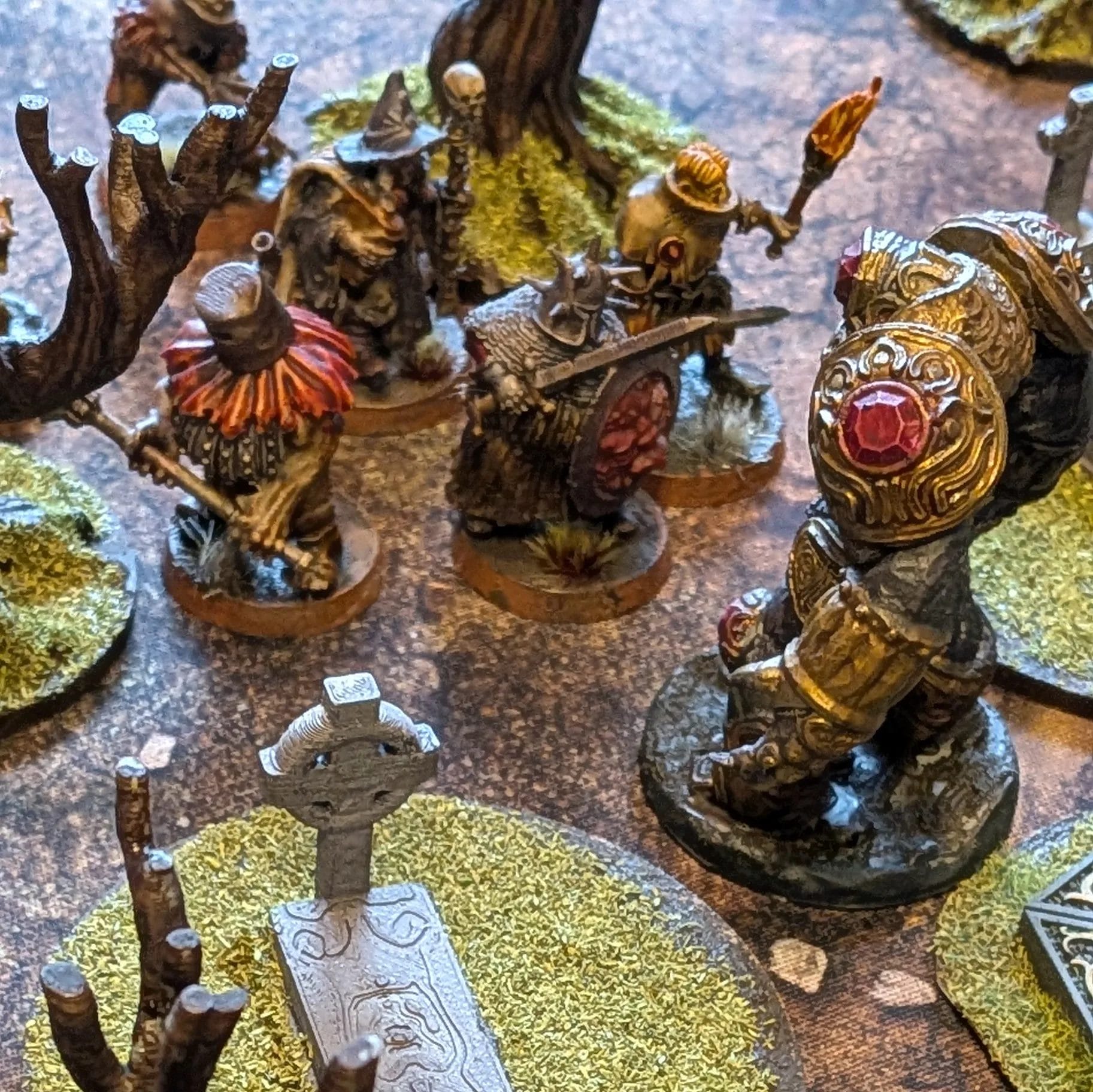
It was finally through some buddies in my roleplaying group that I started dipping my toes back into miniature gaming. I started with Warhammer, but whilst they have some of the best miniatures and lore, their rules are a bloated mess heavily skewed to whichever army had the newest rules refresh. I was about to bounce off the hobby once again when a buddy I played with suggested we try Frostgrave.
In Frostgrave, you play a Wizard, accompanied by their apprentice and a small band of mercenaries who explore the frozen* ruins of Felstad in search of treasure and arcane knowledge. The ruins are full not only of monsters, but rival wizards with their own warbands, also seeking treasure. It’s up to you whether you choose to help each other or go all out and try to get as much treasure as possible.
To get started, you need a warband of ten miniatures, representing your wizard, apprentice and the soldiers you have recruited. Frostgrave doesn’t prescribe what minis you should use, so if you have an existing collection thanks to Warhammer or D&D, you can use those, or you can use boardgame pieces or even Lego minifigs. North Star Miniatures does sell a range of official Frostgrave minis, which are uniformly excellent, but you don’t have to use them. In my group, we currently have:
One player is using a mix of Frostgrave soldiers and Warhammer Bretonian models.

One player using a mix of Victrix Rus and Middle Earth Battle Game minis

One player using a variety of minis from Steamforged’s Epic Encounters range with a 3D printed wizard and apprentice:
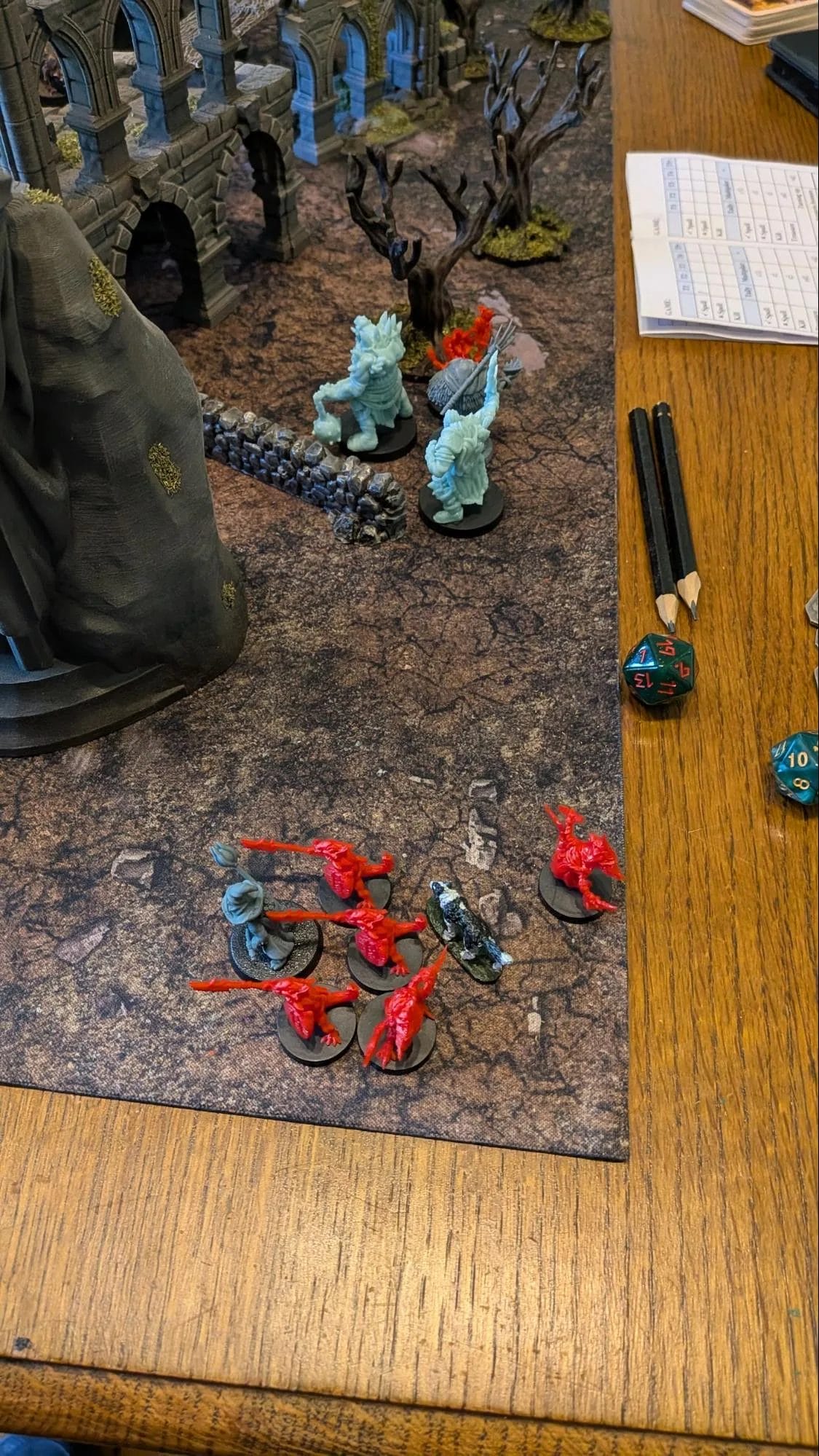
And one player (me) uses 3D Printed minis from Knucklebones Minis.

Once you have your minis, all you really need to play is the core rulebook and a twenty-sided dice. A gaming mat and some scenery is nice, but you can easily proxy the latter with some random small boxes and the former by marking out a 3ft x 3ft place.
We, naturally, overdid it, using a variety of terrain, some scratch-built, some bought online from Qp3d.

Your Wizard and their apprentice will belong to one of ten schools, each of which has ten spells to choose from: Chronomancer, Elementalist, Enchanter, Illusionist, Necromancer, Sigilist, Soothsayer, Summoner, Thaumaturge, and Witch. Certain skills oppose yours (ie Thaumaturges and Necromancers), and the more removed a school is from your own, the harder it is to use their spells. Your choice in spells will affect a lot of how you play on the board, and often it’s usually advisable to cast a non-damaging spell that helps you secure a treasure.
Soldiers cost you varying amounts depending on their relative power, from heavily armoured Knights who cost you 125 gold to hire, down to Thieves and Thugs who are free to hire. Powerful soldiers are useful, but they are expensive to replace when lost, and sometimes you just want a cheap Thief to run in and grab the treasure.

Once you start playing, all rolls are done on a D20, this makes the game feel swingier and closer to an RPG than a wargame. I know a lot of competitive players who don’t like this, but as someone who has played a lot of RPGs, I appreciate it. Sometimes your lowly Thief is able to down a fearsome Troll with a lucky dagger strike, and sometimes your mighty Barbarian is felled by a humble rat. Sometimes you badly whiff a spell you only needed a 5 to cast and sometimes a clutch roll of 18 saves a play going south. These rolls, and the stories they tell in game are what we talk about days and sometimes weeks after a game.
Also, like an RPG you gain experience points from casting spells, collecting treasure and defeating monsters. You can use these experience to make your wizard (and their apprentice) more powerful by improving their attributes, making spells easier to cast or even learning new spells if the treasure you found contains a grimoire. You can use the gold you find to recruit better soldiers or upgrade your base of operations, and you might even find magical items to make your soldiers or wizard stronger.
One key decision I applaud is you don’t get experience for defeating a rival player’s models. You may sometimes need to attack your opponent to keep them from a treasure you want, but it isn’t incentivised. This leads to gentlemen’s agreements and temporary truces across the table, which can be broken as the tides turn.
Just celebrating its 10th Anniversary, the game seems healthier than ever. Joseph McCullough, the writer, has released many supplements for it and the sci-fi spin-off, Stargrave. Frostgrave represents a type of miniature wargame that I really enjoy. One that prizes creativity and narrative over powergaming and an adversarial relationship.
*Yes, I know there’s not a lot of snow on our boards, but let’s be honest, “Grassgrave” doesn’t have the same ring to it.



